

Missing teeth can affect more than your confidence. They may make it harder to eat and speak comfortably and can affect your oral health and quality of life.
According to the American College of Prosthodontists, approximately 120 million Americans are missing at least one tooth, while more than 36 million are missing all of their teeth. If you are dealing with tooth loss, you are not alone—and there are several options available to restore your smile and function.
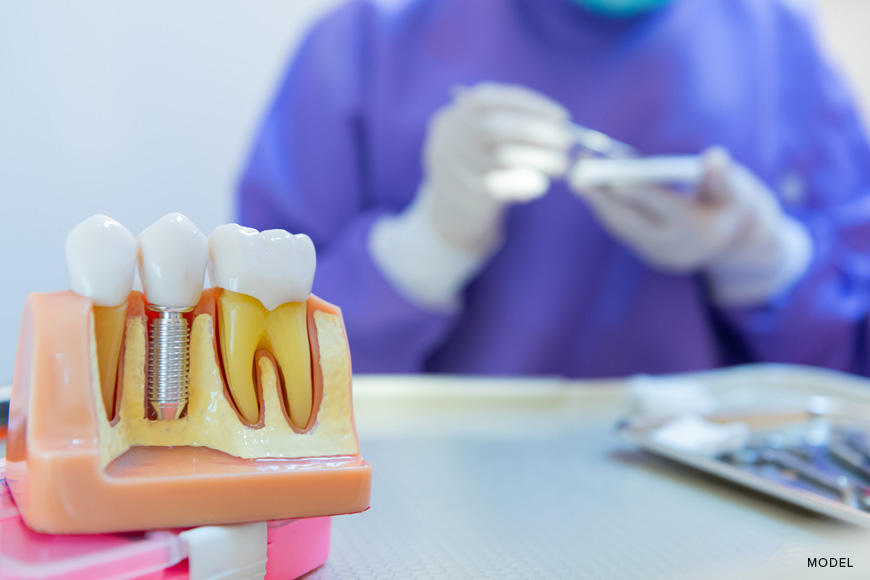
Dental implants are one option for replacing missing teeth and can support crowns, bridges, or implant-supported dentures. However, achieving a stable, functional result involves more than the surgical procedure itself. Careful treatment planning helps your dental team evaluate your oral health, available bone, bite, aesthetic goals, and the type of restoration that best fits your needs.
Here is how our team approaches dental implant planning to create a treatment plan tailored to your individual needs.
The 5 Essential Steps of Dental Implant Planning
1. The Initial Consultation & Your Treatment Goals
Your implant journey begins with a conversation about your needs, concerns, and goals. During your consultation, we discuss your dental history, answer your questions, and learn what you would like to achieve with treatment.
Visualizing Your Results: Depending on your treatment plan, digital images, models, photographs, or other diagnostic tools may be used to help you understand your proposed treatment and expected outcome.
Exploring Your Options: We review the available tooth-replacement options based on your individual situation. These may include fixed implant-supported restorations or removable implant-supported options. Understanding the benefits, limitations, and maintenance requirements of each option helps you make an informed decision about your care.
2. A Comprehensive Health & Safety Assessment
A successful dental implant treatment begins with a thorough evaluation of the structures supporting your restoration. We review your dental and medical history and assess your overall oral health to determine whether implants are appropriate for you.
Checking Oral Health: We examine your gums, remaining teeth, existing dental work, bite, and the area where the implant would be placed. Any active oral health concerns may need to be addressed before implant treatment begins.
Reviewing Relevant Health Factors: Factors such as bone volume and quality, medical conditions, medications, and lifestyle habits—including smoking—may affect implant treatment and healing. Understanding these factors allows your dental team to develop an approach that is appropriate for your needs.
3. Precision 3D CBCT Imaging
Detailed imaging can play an important role in dental implant planning. When clinically indicated, Cone Beam Computed Tomography (CBCT) provides three-dimensional images that allow your dental team to evaluate the jawbone and surrounding anatomical structures.
Detailed Treatment Planning: CBCT imaging can provide information about bone height and width as well as the location of important anatomical structures, such as nerves and the sinus. The American College of Prosthodontists recommends cross-sectional imaging, including CBCT, for preoperative implant assessment when clinically justified.
Virtual Implant Planning: The three-dimensional information can be used to help plan the proposed position and orientation of an implant before surgery. In appropriate cases, digital planning may also support the use of computer-guided surgical techniques.
CBCT is not necessary for every patient. The type and extent of imaging should be determined based on your clinical examination, treatment needs, and the information required for safe and appropriate planning.
4. Customizing Your Implant & Restoration
Every patient’s anatomy and treatment goals are different. Your dentist considers the location of the missing tooth, available bone, bite, aesthetic considerations, and the type of restoration when developing your implant plan.
Implant Selection: The size and design of the implant are selected based on the specific treatment site and the amount and quality of available bone.
Restoration Planning: Implant treatment is planned with the final restoration in mind. Depending on your needs, an implant may support a single crown, a bridge, or an implant-supported denture. The abutment and restoration are selected to support appropriate function, fit, and appearance.
Bone Considerations: If there is not enough bone available for predictable implant placement, additional procedures such as bone grafting may be considered as part of your treatment plan.
5. Tailoring Your Surgical Approach
There is no single surgical approach that is right for every implant patient. The technique used depends on factors such as bone quality, implant stability, the location of the implant, and your overall treatment plan.
One-Stage Procedure: In selected cases, a healing abutment may be placed at the same time as the implant. This allows the implant and surrounding tissues to heal without requiring a separate procedure to expose the implant.
Two-Stage Procedure: In other cases, the implant is placed beneath the gum tissue and allowed to heal before it is exposed and connected to the restoration. This approach may be recommended when additional healing time is needed or when procedures such as bone grafting are part of treatment.
Your dentist will recommend the surgical approach based on your individual anatomy, treatment requirements, and clinical findings.
Ready to Restore Your Smile & Confidence?
At Madison Dentistry & Implant Center, we combine advanced technology with personalized care to help patients understand their options for replacing missing teeth. Whether you are replacing a single tooth or considering treatment for multiple missing teeth, our experienced team can guide you through the planning process and help determine which treatment approach is right for you.
We proudly serve patients throughout Madison, Florham Park, Chatham, Morristown, and Summit.