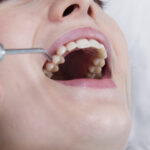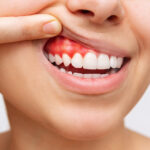


It’s a morning routine you’ve done thousands of times: you wake up, grab your toothbrush, and start brushing. But when you spit into the sink, you notice something unsettling—a streak of pink or red mixed with the toothpaste.
If you are experiencing bleeding gums after brushing, you are not alone. It is one of the most common dental complaints we hear from patients. However, just because it is common doesn’t mean it is “normal.” Healthy gums shouldn’t bleed, just as healthy hands don’t bleed when you wash them.
At Madison Dentistry & Implant Center, located right here in the heart of Madison, New Jersey, we believe that understanding the why behind your symptoms is the first step toward a healthier smile. Whether you are dealing with a minor brushing error or the early stages of gum disease, ignoring the problem won’t make it go away. In this guide, we will explore the root causes of bleeding gums, actionable steps you can take immediately, and how our expert team can help you restore your oral health.
The "Pink in the Sink" Phenomenon: Why Do Gums Bleed?
To solve the problem, we first need to identify the culprit. Bleeding gums are essentially your body’s alarm system, signaling that something is irritating your gum tissue. While the causes vary, they generally fall into two categories: technique issues or underlying health conditions.
1. Gingivitis: The Early Warning Sign
The most frequent cause of bleeding gums is gingivitis, the earliest stage of gum disease. Gingivitis occurs when plaque—a sticky film of bacteria—builds up along the gumline. If not removed through effective brushing and flossing, this plaque hardens into tartar (calculus), which irritates the gums, causing them to become red, swollen, and prone to bleeding.
The good news? Gingivitis is completely reversible with professional cleaning and improved home care.
2. Aggressive Brushing and Flossing
Are you scrubbing your teeth like you’re trying to remove a stain from a carpet? Brushing too hard or using a toothbrush with hard bristles can physically traumatize your gum tissue, causing it to bleed. Similarly, if you haven’t flossed in a while and suddenly start again, your gums may bleed initially as they adjust to the stimulation.
3. Medications and Health Conditions
Your oral health is a window to your overall health. Certain conditions and medications can increase the likelihood of bleeding gums, including:
- Blood thinners: Medications like aspirin or warfarin reduce the blood’s ability to clot.
- Hormonal changes: Pregnancy gingivitis is a real condition where hormonal surges increase blood flow to the gums, making them more sensitive.
- Vitamin deficiencies: A lack of Vitamin C or K can affect gum health and clotting.
5 Actionable Tips to Stop Bleeding Gums Naturally
Before you panic, there are several changes you can make to your daily routine to soothe your gums and prevent further irritation.
Switch to a Soft-Bristled Toothbrush
Many people believe medium or hard bristles clean better, but they are often too abrasive for delicate gum tissue. Switch to a soft-bristled brush and use gentle, circular motions rather than a back-and-forth sawing motion.
Master Your Flossing Technique
Don’t snap the floss down onto your gums. Instead, gently slide it between your teeth and curve it into a “C” shape around the base of the tooth. Move it up and down to remove plaque hidden below the gumline. If you are new to flossing, the bleeding should stop after a week of consistent, gentle practice.
Use a Salt Water Rinse
Salt water is a natural disinfectant and anti-inflammatory. Dissolve half a teaspoon of salt in a glass of warm water and swish it around your mouth for 30 seconds. This can help reduce swelling and kill bacteria.
Boost Your Vitamin Intake
Ensure your diet is rich in Vitamin C (found in oranges, strawberries, and peppers), which strengthens soft tissue, and Vitamin K (found in leafy greens like kale and spinach), which is essential for blood clotting.
Quit Smoking
Smoking weakens your immune system, making it harder for your body to fight off gum infection. It also restricts blood flow to the gums, which can sometimes mask the bleeding, allowing gum disease to progress unnoticed.
When Should You See a Dentist?
While occasional bleeding from brushing too hard might resolve on its own, persistent bleeding is a red flag. You should schedule an appointment at Madison Dentistry & Implant Center if:
- Your gums bleed regularly, even with gentle brushing.
- Your gums look red, swollen, or are pulling away from your teeth (receding).
- You have persistent bad breath or a bad taste in your mouth.
- Your teeth feel loose or are shifting.
These are signs that gingivitis may have progressed to periodontitis, a more serious form of gum disease that damages the soft tissue and bone supporting your teeth.
Professional Treatment at Madison Dentistry & Implant Center
If home remedies aren’t stopping the bleeding, professional intervention is necessary. At our clinic in Madison, NJ, we offer comprehensive periodontal care tailored to your needs.
Comprehensive Exams & Digital X-Rays
We start with a thorough examination to assess the health of your gums and measure the depth of the “pockets” around your teeth. Digital X-rays allow us to see if there is any bone loss not visible to the naked eye.
Scaling and Root Planing (Deep Cleaning)
For patients with gum disease, a standard cleaning isn’t enough. We perform Scaling and Root Planing, a non-surgical procedure where we remove plaque and tartar from above and below the gumline (scaling) and smooth out your teeth roots (planing) to help your gums reattach to the teeth.
Frequently Asked Questions (FAQs) about Bleeding Gums After Brushing
Can stress cause my gums to bleed?
Yes! High levels of stress increase cortisol, which can lead to inflammation throughout the body, including your gums. Stress can also weaken your immune system, making it harder to fight off gum infections.
Is bleeding gums contagious?
Bleeding gums themselves are not contagious, but the bacteria that cause gingivitis can be spread through saliva. Avoid sharing toothbrushes or utensils if you or a family member has gum disease.
I’m pregnant and my gums are bleeding. Is this dangerous for the baby?
“Pregnancy gingivitis” is common, but it should be treated. Studies have linked severe gum disease to premature birth and low birth weight. If you are pregnant in the Madison or Morristown area, let us know so we can monitor your gum health closely during your prenatal period.
How often should I get a dental cleaning?
For most patients, every six months is standard. However, if you have a history of gum disease or bleeding gums, we may recommend visiting our Madison, NJ office every 3 to 4 months for maintenance.
Summary: Take the Next Step Toward a Healthy Smile
Bleeding gums after brushing is a common issue, but it is rarely a sign of good health. It is your body’s way of asking for help. Whether the cause is a simple technique error or the onset of gum disease, addressing it early is key to saving your teeth and protecting your overall health.
Don’t let “pink in the sink” become your new normal. By combining excellent oral hygiene at home with professional care from Madison Dentistry & Implant Center, you can stop the bleeding and enjoy a confident, healthy smile.
Ready to Restore Your Gum Health? Contact us today to schedule your appointment.