

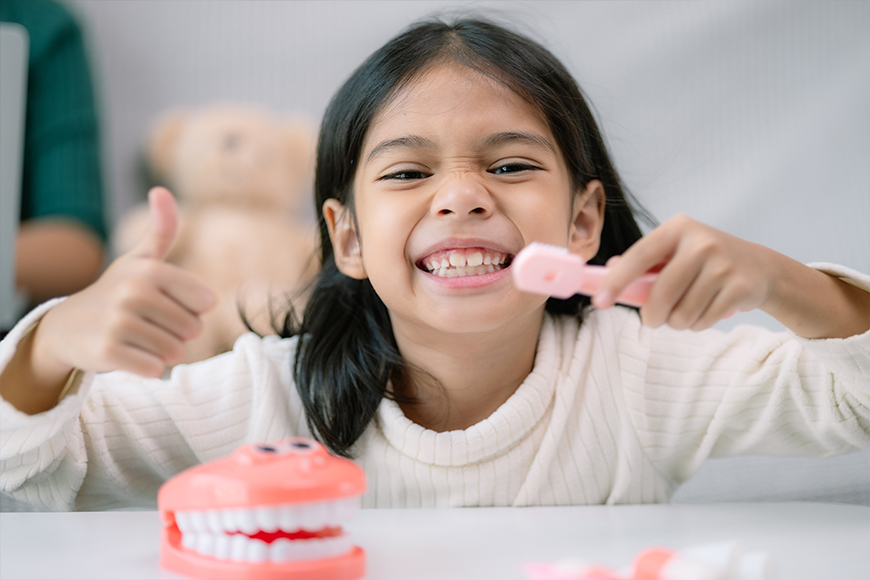
As a parent, your days are likely filled with a whirlwind of packed lunches, school drop-offs, and bedtime routines. Amidst the chaos of raising a family, there’s one daily battle that often tests a parent’s patience: brushing the kids’ teeth.
If you’ve ever had to negotiate with a toddler to open their mouth or remind your teenager for the third time to floss, you are not alone. However, establishing pristine dental habits early on is one of the most significant investments you can make in your child’s overall well-being—a crucial Oral Health Tip for Children. Tooth decay is the most common chronic childhood disease, yet it is almost entirely preventable.
In this comprehensive guide, we are breaking down the absolute best oral health tips for children. From wiping an infant’s gums to protecting a teenager’s permanent teeth, we will walk you through exactly what you need to know to keep those sugar bugs at bay and ensure your child’s smile stays bright and healthy.
Start Before the First Tooth Arrives
A common misconception among new parents is that dental care begins when the first tooth erupts. In reality, a healthy oral environment starts from day one.
Actionable Tip: Even before your baby’s first tooth makes an appearance, gently wipe their gums with a clean, damp washcloth or a soft infant gum-brush after every feeding. This removes the sticky film of bacteria that can build up from breast milk or formula. It also gets your baby accustomed to the sensation of having their mouth cleaned, making the transition to a toothbrush much smoother down the road.
Master the Art of Brushing (The 2x2 Rule)
Once that first tiny tooth breaks through the gums, it is time to upgrade to a toothbrush. The golden rule of brushing for both children and adults is the “2×2 Rule”—brushing twice a day for two full minutes.
Choosing the Right Toothpaste
The American Dental Association (ADA) recommends using fluoride toothpaste as soon as the first tooth erupts. However, portion control is vital:
- For children under 3 years old: Use a smear of fluoride toothpaste roughly the size of a grain of rice.
- For children ages 3 to 6: Use a pea-sized amount.
Making Brushing Fun
Two minutes can feel like an eternity to a child. To keep them engaged, turn brushing into a game. Play their favorite two-minute song, use a colorful sand timer, or invest in a smart toothbrush that connects to an interactive app. When children associate oral hygiene with fun rather than a chore, they are far more likely to stick with the habit as they grow.
Flossing is Not Optional
Brushing only cleans about 60% of the tooth’s surface. The remaining 40% lies in the tight spaces between the teeth, where toothbrush bristles simply cannot reach.
Actionable Tip: As soon as your child has two teeth that touch, it is time to start flossing. For many parents, wrapping traditional string floss around tiny, squirming fingers is a nightmare. Instead, try using kid-friendly floss picks with colorful handles. Guide the floss gently between the teeth in a “C” shape, hugging the side of each tooth. Aim to floss once a day, preferably right before bedtime, so food particles don’t sit between the teeth overnight.
Beware of the "Sugar Bugs": Diet and Dental Health
What your child eats has a direct and profound impact on their oral health. The bacteria in the mouth feed on sugars and starches, producing acids that eat away at tooth enamel and cause cavities.
The Danger of Sticky Foods
While candy is an obvious culprit, many “healthy” snacks are secretly terrible for teeth. Sticky foods like gummy vitamins, fruit snacks, and raisins cling to the grooves of the teeth and provide a long-lasting feast for bacteria.
Smart Snacking Strategies
Encourage your kids to snack on tooth-friendly foods like crisp apples, celery, carrots, and cheese. Cheese is particularly beneficial as it stimulates saliva production (the mouth’s natural defense mechanism) and contains calcium and phosphorus, which help remineralize enamel.
Furthermore, limit juice and sugary drinks. If your child does have a sweet treat or juice, try to have them consume it alongside a meal rather than sipping on it throughout the day. This limits the amount of time their teeth are exposed to acid attacks. Always encourage them to drink plenty of water to wash away food particles.
Sealants and Fluoride: Your Child’s Invisible Armor
Even with the best brushing and flossing routines, the deep grooves on the chewing surfaces of the back molars are notoriously difficult to keep clean. This is where modern pediatric dentistry comes to the rescue.
- Dental Sealants: A sealant is a thin, protective coating painted onto the chewing surfaces of the back teeth. It quickly bonds into the depressions and grooves of the teeth, forming a physical shield over the enamel of each tooth to keep germs and food out. The CDC reports that sealants protect against 80% of cavities for two years and continue to protect against 50% of cavities for up to four years.
- Fluoride Treatments: Professional fluoride varnish applied during your child’s routine dental visit is much stronger than what is found in toothpaste or tap water. It helps to strengthen the enamel, making it more resistant to acid attacks, and can even reverse early signs of tooth decay.
Protect Their Smiles During Sports
If your child plays contact sports or engages in high-impact recreational activities like skateboarding or gymnastics, a mouthguard is essential. A custom-fitted mouthguard provided by your dentist offers superior protection compared to store-bought “boil-and-bite” options. It cushions impacts that might otherwise cause broken teeth, lip lacerations, or even jaw injuries.
Partnering with Your Local Experts: Madison Dentistry & Implant Center
The American Academy of Pediatric Dentistry recommends that a child should go to the dentist by age 1 or within six months after the first tooth erupts. Establishing a “Dental Home” early allows your child to get comfortable with the sights, sounds, and friendly faces at the dental office.
At Madison Dentistry & Implant Center, located right in the heart of Madison, New Jersey, we pride ourselves on creating a warm, welcoming, and anxiety-free environment for families. We understand that finding a dentist you can trust with your child’s smile is incredibly important.
Our experienced team is dedicated to preventative care and education, ensuring that both you and your child are equipped with the knowledge needed for excellent oral health. We don’t just serve Madison; we are proud to be the trusted dental home for families in surrounding communities, including Chatham, Florham Park, Morristown, Summit, Short Hills, and Harding Township. Whether it’s your baby’s first check-up, applying preventative sealants for your elementary schooler, or providing a custom mouthguard for your teenage athlete, our comprehensive services are tailored to meet your family’s needs at every stage of development.
Frequently Asked Questions (FAQs)
At what age should my child start using mouthwash?
Children should generally not use mouthwash until they are around 6 years old. Before this age, they are more likely to swallow the liquid rather than spit it out. When you do introduce mouthwash, look for an alcohol-free, fluoride rinse designed specifically for kids.
Is thumb sucking bad for my child’s teeth?
Sucking on thumbs or pacifiers is a natural, soothing reflex for infants and toddlers. Most children grow out of it on their own by age 3 or 4. However, if the habit continues once the permanent teeth start coming in, it can affect the alignment of the teeth and the shape of the roof of the mouth. If you’re concerned, bring it up at your next appointment at Madison Dentistry & Implant Center.
Are electric toothbrushes better for kids than manual ones?
Electric toothbrushes can be highly effective because they do a lot of the brushing work for the child. Many come with built-in timers, which helps enforce the 2-minute rule. As long as your child is using proper technique and brushing for the full two minutes, either a manual or electric toothbrush can get the job done—the best brush is the one your child will actually use!
What should I do if my child knocks out a permanent tooth?
A knocked-out permanent tooth is a dental emergency. Find the tooth, handle it only by the crown (the top part, not the root), and gently rinse it with water if it’s dirty. Do not scrub it. Try to reinsert it into the socket and have the child bite down on clean gauze. If that’s not possible, store the tooth in a small container of milk or the child’s saliva and head to the dentist immediately. Time is of the essence for saving the tooth!
Summary: Oral Health Tips For Children
Cultivating excellent oral hygiene habits in childhood lays the foundation for a lifetime of healthy, confident smiles. Remember to start cleaning their mouths early, enforce the two-minute brushing rule, introduce flossing as soon as teeth touch, and be mindful of sugary snacks. Most importantly, don’t skip those biannual dental checkups.
Preventative care is always easier, more comfortable, and more cost-effective than restorative care. If you are looking for compassionate, top-tier dental care for your family in Morris County and beyond, we are here to help. Schedule an appointment today!