
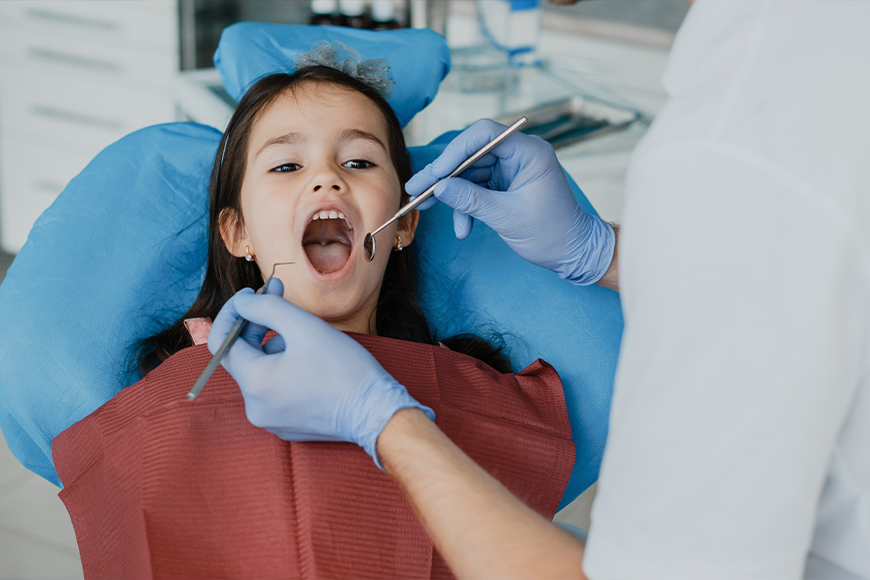
There is nothing quite as infectious as a child’s bright, carefree smile. But when your little one complains of a toothache, or when your dentist gently informs you during a routine checkup that your child has a cavity, that bright moment can quickly turn into parental panic.
Will it hurt? Do baby teeth really need to be fixed if they are just going to fall out anyway? What are the safest treatment options?
If you are asking these questions, you are not alone. Dental decay is one of the most common chronic conditions of childhood in the United States. Fortunately, modern pediatric dentistry has made incredible advancements. Treating childhood cavities and restoring damaged teeth is now safer, faster, and more comfortable than ever before.
In this comprehensive guide, we will walk you through everything you need to know about children tooth restoration. Whether you are dealing with a minor cavity or a severely decayed primary tooth, we will explain the treatments available and how the expert team at Madison Dentistry & Implant Center ensures your child’s smile remains healthy and pain-free.
Why Restore "Baby Teeth"? The Myth of the Temporary Tooth
One of the most common misconceptions we hear from parents is, “Why go through the trouble of a children’s tooth restoration if the tooth is going to fall out eventually?”
It is a logical question, but ignoring decay in primary (baby) teeth can lead to severe, long-term consequences for your child’s oral and overall health. Primary teeth serve several critical, foundational purposes:
- Proper Nutrition and Chewing: Teeth that are decayed or painful make chewing difficult. This can lead to nutritional deficiencies if a child begins avoiding healthy but harder-to-chew foods like apples, carrots, or proteins.
- Speech Development: Our teeth play a vital role in how we articulate sounds. Premature loss of baby teeth can lead to speech impediments that require extensive therapy to correct.
- Placeholders for Permanent Teeth: This is perhaps their most important job. Baby teeth hold the correct amount of space in the jaw for the adult teeth to erupt. If a primary tooth is lost prematurely to decay, neighboring teeth can shift into the empty space, causing severe crowding and alignment issues for the incoming permanent teeth.
- Overall Health and Wellbeing: An untreated cavity is an active infection. In children, this infection can easily spread to the surrounding tissues, the developing adult tooth underneath, or even into the bloodstream, posing a serious health risk.
Common Types of Children’s Tooth Restoration
When it comes to pediatric dental restorations, the treatment depends on the severity of the decay or damage. At Madison Dentistry & Implant Center, our approach is highly conservative—we only recommend the treatment necessary to safely restore your child’s dental health.
Here are the most common restorative procedures for children:
1. Dental Fillings (Composite Resin)
For small to moderate cavities, a dental filling is the standard line of defense. First, the dentist gently removes the decayed portion of the tooth. Then, the space is filled to restore the tooth’s shape and function.
- The Modern Approach: Today, we use composite resin, which is a tooth-colored material that blends seamlessly with your child’s natural enamel. It is safe, durable, and highly aesthetic, meaning nobody will even know your child had a cavity.
2. Pediatric Dental Crowns
When a tooth has extensive decay, a simple filling might not provide enough structural support. In these cases, a pediatric dental crown is required. A crown acts like a “cap” that covers the entire visible portion of the tooth, protecting it from further damage until it naturally falls out.
- Stainless Steel Crowns (SSCs): These are the gold standard for restoring back molars in children. They are incredibly durable, cost-effective, and can withstand the heavy chewing forces of the back of the mouth.
- Zirconia (White) Crowns: For parents looking for a more cosmetic option, or for front teeth that are highly visible, tooth-colored zirconia crowns offer incredible strength alongside a perfectly natural appearance.
3. Pulpotomy (The “Baby Root Canal”)
If dental decay penetrates deep into the tooth and reaches the inner pulp (where the nerves and blood vessels live), a child may experience severe pain and sensitivity. A pulpotomy is a specialized children’s tooth restoration designed to save the tooth.
- How it works: The pediatric dentist removes the infected portion of the pulp within the crown of the tooth, leaving the healthy pulp in the roots intact. The area is medicated to soothe the nerve and prevent further infection, and the tooth is then topped with a crown to restore its strength.
4. Extractions and Space Maintainers
In cases where a tooth is too severely damaged or infected to be saved, an extraction becomes the safest option for your child’s overall health. If a primary tooth must be removed early, your dentist will likely place a space maintainer. This is a small, custom-made dental appliance that keeps the space open, preventing adjacent teeth from shifting until the permanent tooth is ready to erupt.
Signs Your Child Might Need a Tooth Restoration
Children aren’t always great at articulating their physical discomfort. As a parent, keeping an eye out for these subtle signs can help you catch tooth decay early:
- Complaints of Pain: Unprovoked toothaches or throbbing pain, especially at night.
- Sensitivity to Temperatures: Wincing or crying when eating hot soup, cold ice cream, or even breathing in cold winter air.
- Sensitivity to Sweets: Pain that flares up specifically when eating sugary foods or drinks.
- Visible Changes: Dark spots, chalky white patches (an early sign of enamel demineralization), or visible holes in the teeth.
- Changes in Eating Habits: Suddenly chewing on only one side of the mouth or refusing to eat their favorite crunchy foods.
The Madison Dentistry & Implant Center Difference
Finding out your child needs a dental procedure can be stressful, which is why choosing the right local provider is paramount. Madison Dentistry & Implant Center, conveniently located right here in Madison, New Jersey, is dedicated to providing anxiety-free, compassionate care for children of all ages.
We proudly serve families not just in Madison, but from all our wonderful neighboring communities, including Chatham, Florham Park, Morristown, Summit, and Harding.
Why Parents Trust Us:
- A Gentle Approach: We use “Tell-Show-Do” techniques to explain procedures to children in kid-friendly terms, removing the fear of the unknown.
- State-of-the-Art Technology: From low-radiation digital X-rays to advanced, minimally invasive tools, we utilize technology that makes procedures faster and more comfortable.
- Sedation Options: For young children, those with special needs, or kids with severe dental anxiety, we offer safe, pediatric-focused sedation options like laughing gas (Nitrous Oxide) to help them relax.
- A Focus on Education: We don’t just fix the tooth; we partner with parents to ensure you leave our office equipped with the knowledge to prevent future decay.
Actionable Tips for Preventing Future Decay
The best children’s tooth restoration is the one that never has to happen! Once your child’s tooth is restored, use these actionable tips to keep the rest of their smile in perfect condition:
- Supervise Brushing: Children generally do not have the manual dexterity to brush effectively on their own until they can tie their own shoes (around age 7 or 8). Supervise their brushing twice a day with a fluoride toothpaste.
- Make Flossing Non-Negotiable: As soon as two teeth touch, it is time to start flossing. Plaque hides in tight spaces between teeth where bristles cannot reach.
- Limit Sticky Sweets and Frequent Snacking: Gummies, fruit snacks, and constant grazing keep the mouth in an acidic state, fueling cavity-causing bacteria. Stick to structured meal and snack times.
- Drink More Water: Encourage your child to drink fluoridated tap water, especially after meals, to help wash away food particles and neutralize acids.
- Keep Up with Bi-Annual Checkups: Bring your child into Madison Dentistry & Implant Center every six months. Preventive care and professional cleanings are your best defense against complex dental issues.
Frequently Asked Questions (FAQs)
Are dental X-rays safe for my child?
Yes. At Madison Dentistry & Implant Center, we use advanced digital X-rays that emit up to 90% less radiation than traditional film X-rays. They are a vital tool for seeing cavities between the teeth that cannot be detected by a visual exam alone.
How long does a children's tooth restoration take?
Most simple fillings or pediatric crowns can be completed in a single visit, often in under 45 minutes. We work efficiently to minimize the time your child spends in the chair.
Will my child be in pain after the procedure?
During the procedure, your child’s mouth will be completely numb. Afterward, some mild sensitivity or soreness around the gums is normal for a day or two. Over-the-counter children’s pain relievers (like ibuprofen or acetaminophen) are usually more than enough to manage any discomfort.
We live in Summit; are you accepting new pediatric patients?
Absolutely! We welcome families from Summit, Chatham, Morristown, Florham Park, and all surrounding areas. Our clinic is easily accessible and we are always thrilled to welcome new smiling faces.
Conclusion: Children Tooth Restoration
Dealing with childhood cavities doesn’t have to be a nightmare. With prompt action and the right team of professionals, a children’s tooth restoration is a straightforward, routine procedure that will relieve your child’s pain and protect their future adult smile.
Remember, baby teeth are the blueprints for a lifetime of healthy adult teeth. Don’t wait until a tiny cavity turns into a major toothache.
Is your child complaining of a toothache, or are they simply due for their next checkup? Would you like me to help you draft an email or find the contact information to schedule an appointment with Madison Dentistry & Implant Center today?