
A sudden, sharp pain when you bite down. A lingering ache when you drink your morning coffee. The terrifying “crunch” sound when you accidentally bite into an unpopped popcorn kernel. If you have ever experienced a cracked tooth, you know that the pain and anxiety it causes can be entirely overwhelming.
You might be wondering: Can my tooth be saved? Or is an extraction inevitable?
At Madison Dentistry & Implant Center, located right here in the heart of Madison, New Jersey, we see patients every day who are dealing with the discomfort and stress of a cracked tooth. While our primary goal is always to preserve your natural smile, there are times when a cracked tooth extraction is the safest, most effective way to protect your oral health and eliminate your pain.
In this comprehensive guide, we will walk you through exactly what a cracked tooth is, why extraction sometimes becomes the only option, what to expect during the procedure, and how you can seamlessly restore your smile afterward. Whether you are reading this from Chatham, Florham Park, Morristown, or right here in Madison, we want to empower you with the knowledge you need to make the best decision for your dental health.
Understanding the Cracked Tooth: Why Does It Happen?
Teeth are incredibly strong—tooth enamel is the hardest substance in the human body. However, they are not invincible. A cracked tooth (often referred to as Cracked Tooth Syndrome) occurs when a crack develops in your tooth, which can range from a superficial hairline fracture to a deep split that extends down into the root.
Common Causes of a Cracked Tooth
- Chewing Hard Objects: Ice, hard candy, popcorn kernels, and even pens.
- Teeth Grinding (Bruxism): Chronic grinding or clenching puts immense pressure on your teeth, eventually leading to structural failure.
- Large Fillings: Teeth with massive fillings have less natural tooth structure, making them more brittle over time.
- Trauma: A blow to the mouth from sports, an accident, or a fall.
- Age: Just like the rest of our bodies, teeth experience wear and tear. Most cracked teeth occur in individuals over the age of 50.
- Extreme Temperature Changes: Eating something very hot and immediately drinking ice water can cause the enamel to contract and expand rapidly, leading to cracks.
Signs You Might Have a Cracked Tooth
Unlike a cavity, which produces a constant ache, the pain from a cracked tooth is often erratic. Symptoms include:
- Sharp pain when chewing or biting down, especially upon release of the bite.
- Sudden sensitivity to hot, cold, or sweet foods and beverages.
- Swelling of the gum tissue around the affected tooth.
- Intermittent pain that comes and goes, making it difficult for you to pinpoint exactly which tooth is hurting.
When Is a Cracked Tooth Extraction Necessary?
When you visit us at Madison Dentistry & Implant Center, our first step is always a thorough examination using advanced imaging technology to determine the extent of the damage.
Not all cracked teeth need to be pulled. If the crack is localized to the crown (the visible part of the tooth) and has not extended into the pulp or below the gumline, we can often save it with a dental crown, a filling, or a root canal.
However, a cracked tooth extraction becomes strictly necessary in the following scenarios:
- The Crack Extends Below the Gumline: If the fracture line travels down into the root of the tooth, it cannot be salvaged.
- A Split Tooth: This happens when a cracked tooth is left untreated, and the tooth completely separates into two distinct segments.
- Vertical Root Fractures: These cracks begin at the root and travel upward toward the chewing surface. They often show minimal symptoms until the surrounding bone and gums become severely infected.
- Severe Infection: If the crack has allowed bacteria to penetrate deep into the tooth, causing massive decay and an abscess that destroys the surrounding jawbone, removal is necessary to stop the spread of infection.
The Extraction Process: What to Expect
The words “tooth extraction” can trigger anxiety for many patients. We completely understand. However, modern dentistry has evolved, and at Madison Dentistry & Implant Center, your comfort is our absolute priority. Here is a step-by-step breakdown of the extraction process to put your mind at ease.
1. Advanced Diagnostics and Planning
Before doing anything, our expert team will take digital X-rays or a 3D CBCT scan to assess the exact angle of the crack, the anatomy of your tooth’s roots, and the condition of the surrounding bone.
2. Complete Numbing for a Pain-Free Experience
We utilize state-of-the-art local anesthetics to completely numb the tooth, jawbone, and surrounding gums. You will feel pressure during the procedure, but you should not feel any sharp pain. For patients with high dental anxiety, we also offer sedation dentistry options to ensure a deeply relaxed experience.
3. The Extraction
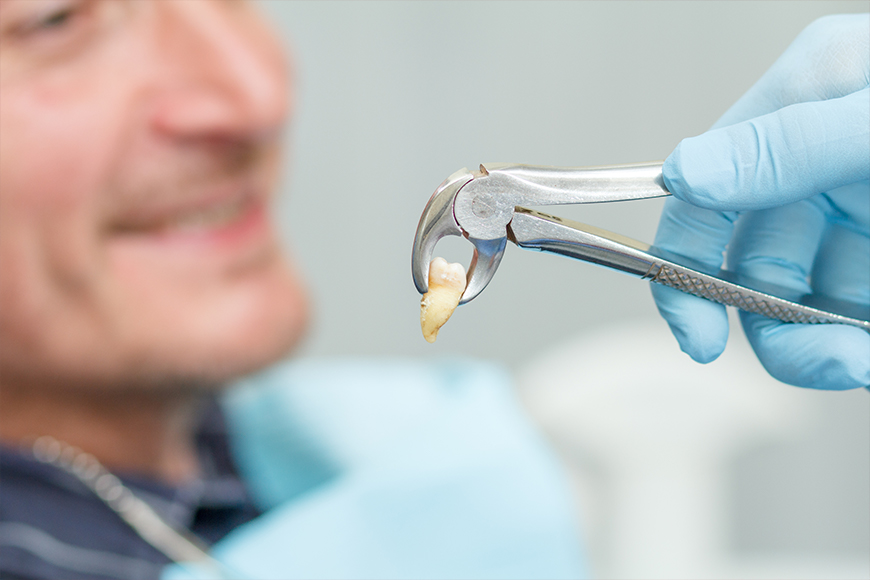
Because a cracked tooth is already structurally compromised, it requires a delicate touch. Our highly skilled dentists carefully widen the socket and gently rock the tooth to release it from the ligaments holding it in place. If the tooth is severely cracked or split, it may be removed in smaller pieces to minimize trauma to the surrounding jawbone.
4. Bone Grafting (Optional but Recommended)
If you plan to replace the extracted tooth with a dental implant—which we highly recommend—we will often place a bone graft into the empty socket immediately after extraction. This preserves the jawbone‘s density and structure, creating a solid foundation for your future implant.
Post-Extraction Care: Actionable Tips for a Smooth Recovery
How you care for your mouth after a cracked tooth extraction is just as important as the procedure itself. Follow these actionable tips to promote rapid healing and prevent complications like dry socket:
- Bite Down on Gauze: Keep firm pressure on the gauze pad placed over the surgical site for 30 to 45 minutes to encourage a blood clot to form.
- Apply Ice: Apply an ice pack to the outside of your cheek for 15-minute intervals during the first 24 hours to minimize swelling.
- Take Medication as Directed: Use prescribed painkillers or over-the-counter anti-inflammatories (like Ibuprofen) as instructed by your dentist.
- Eat Soft Foods: Stick to a diet of yogurt, applesauce, mashed potatoes, and smoothies for the first few days. Avoid eating on the side of the extraction.
- Do NOT Use a Straw: The suction from using a straw can dislodge the blood clot, leading to a painful condition called dry socket. Avoid smoking for the same reason.
- Gentle Cleaning: Brush your teeth as usual, but avoid the extraction site for the first 24 hours. After that, gently rinse with warm salt water a few times a day to keep the area clean.
Restoring Your Smile: Life After Extraction
Having a tooth pulled leaves a gap in your smile, but it also leaves a gap in your oral function. When a tooth is missing, surrounding teeth can begin to shift out of place, altering your bite. Furthermore, the jawbone underneath the empty space will begin to deteriorate over time due to a lack of stimulation from a tooth root.
As our name suggests, Madison Dentistry & Implant Center specializes in the gold standard of tooth replacement: Dental Implants.
A dental implant is a small titanium post that acts as an artificial tooth root. It is surgically placed into your jawbone, where it fuses with the bone over time. Once healed, a custom-crafted, incredibly lifelike dental crown is attached to the top.
Why choose an implant after a cracked tooth extraction?
- It looks, feels, and functions exactly like a natural tooth.
- It prevents jawbone loss.
- It keeps adjacent teeth perfectly in place.
- It does not require altering neighboring healthy teeth (unlike a dental bridge).
- With proper care, a dental implant can last a lifetime.
Why Choose Madison Dentistry & Implant Center?
Finding a dentist you trust with a complex procedure like a cracked tooth extraction is crucial. If you live in Madison, NJ, or the neighboring communities of Chatham, Florham Park, Morristown, Summit, or Harding, Madison Dentistry & Implant Center is your premier local destination for comprehensive, compassionate dental care.
We pride ourselves on serving Morris County with top-tier technology and a patient-first approach. We understand that a dental emergency doesn’t wait for a convenient time, which is why our local clinic is equipped to handle urgent cases, offering rapid relief from tooth pain and permanent, beautiful restorative solutions right in your neighborhood. You don’t have to travel far into the city to receive world-class implant dentistry and surgical care—it’s right here in Madison.
Frequently Asked Questions (FAQs)
Can a cracked tooth heal itself?
Unlike a broken bone, a cracked tooth cannot heal itself. Tooth enamel does not contain living cells that can regenerate. Immediate professional dental intervention is required to prevent the crack from worsening.
Does pulling a cracked tooth hurt?
With modern local anesthetics, the extraction procedure itself is not painful. You will feel pressure, but no sharp pain. Post-operative discomfort is normal but can be easily managed with over-the-counter or prescribed pain relievers.
How long does a cracked tooth extraction take?
A standard extraction usually takes about 20 to 40 minutes from start to finish. If the tooth is severely broken beneath the gumline, a surgical extraction may take slightly longer.
How soon after extraction can I get a dental implant?
In some cases, we can perform “immediate implant placement” on the same day as the extraction. In other cases, we may place a bone graft and wait 3 to 6 months for the bone to heal fully before placing the implant. Our team will design a custom timeline for your specific needs.
Conclusion: Don't Let a Cracked Tooth Steal Your Smile
A cracked tooth is a stressful, painful experience, but it doesn’t have to be a nightmare. While preserving your natural teeth is always the goal, a cracked tooth extraction is sometimes the healthiest choice to eliminate pain, stop the spread of infection, and set the stage for a flawless, permanent replacement.
By understanding the symptoms, seeking prompt treatment, and following proper aftercare, you can navigate this dental hurdle with confidence. And remember, losing a tooth is not the end of your perfect smile—with modern dental implants, it can actually be a brand-new beginning.
Are you experiencing sharp tooth pain or suspect you might have a cracked tooth? Don’t wait until the damage becomes irreversible. Schedule an appointment today!