
It usually starts as a dull, localized ache. You might notice a slight twinge when you sip your morning coffee or bite into a cold apple. You brush it off, hoping it will disappear. But within days—or sometimes hours—that minor annoyance transforms into a relentless, throbbing pain that radiates through your jaw, keeps you awake at night, and makes it impossible to concentrate.
If this sounds familiar, you are likely dealing with a tooth infection, medically known as a dental abscess.
A tooth infection is not just a nuisance; it is a serious dental emergency. Unlike a scraped knee or a common cold, a bacterial infection inside your tooth will not heal on its own. Left untreated, the infection can spread to surrounding bone, neighboring teeth, and even your bloodstream.
In this comprehensive guide, we will break down exactly what a tooth infection is, the red-flag symptoms you cannot ignore, actionable at-home relief strategies, and the professional tooth infection treatment we provide at Madison Dentistry & Implant Center. Whether you are located right here in Madison, New Jersey, or are visiting us from neighboring communities like Chatham, Morristown, Florham Park, or Summit, prompt and effective treatment is just a phone call away.
What Exactly is a Tooth Infection?
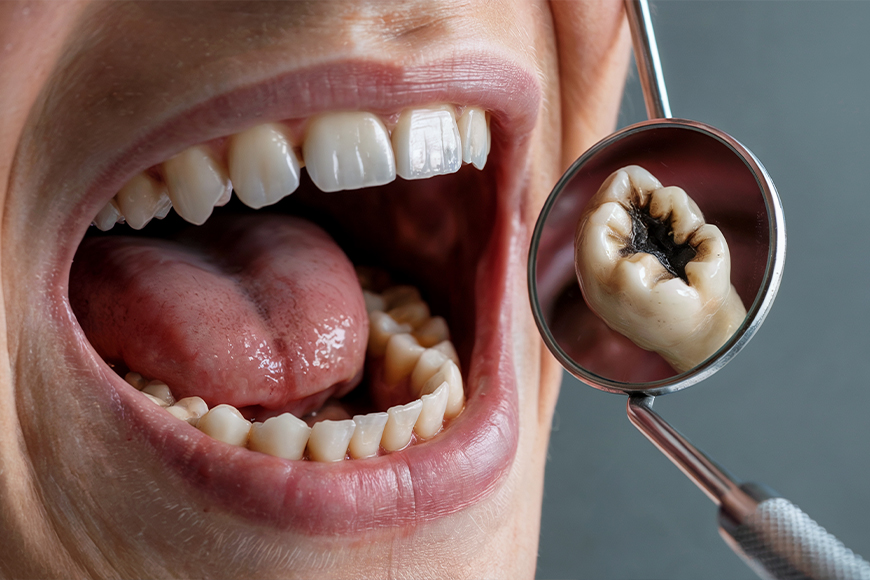
A tooth infection occurs when bacteria invade the dental pulp—the innermost part of the tooth that contains blood vessels, connective tissue, and nerves. This usually happens as a result of severe tooth decay (an untreated cavity), a chipped or broken tooth, or advanced gum disease.
Once bacteria enter this sterile environment, they multiply rapidly. Your body’s immune system responds by sending white blood cells to fight the infection, which results in the formation of pus. This localized pocket of pus is called an abscess.
There are two primary types of dental abscesses:
- Periapical Abscess: This occurs at the very tip of the tooth’s root. It is usually the result of deep decay or trauma that has cracked the tooth, allowing bacteria to reach the pulp.
- Periodontal Abscess: This occurs in the gums next to the tooth root and is generally associated with severe gum disease (periodontitis) rather than decay originating inside the tooth itself.
Because the tooth is a hard, enclosed shell, the accumulating pus has nowhere to go. This builds immense pressure against the highly sensitive nerves, resulting in the excruciating pain commonly associated with an infected tooth.
Red Flags: Signs You Need Immediate Treatment
How do you know if your toothache is just a minor sensitivity or a full-blown infection requiring an emergency trip to the dentist? Watch out for these unmistakable red flags:
- Severe, Throbbing Pain: A persistent, intense pain that may radiate to your jawbone, neck, or ear. It often worsens when you lie down.
- Temperature Sensitivity: Extreme, lingering pain when consuming hot or cold foods and beverages.
- Pressure Sensitivity: Sharp pain when chewing or biting down.
- Swelling: Noticeable swelling in your cheek, jaw, or the lymph nodes in your neck.
- Fever: A systemic response indicating your body is trying to fight off the bacterial invasion.
- A Foul Taste or Odor: If the abscess ruptures, you may suddenly experience a rush of foul-tasting, salty fluid in your mouth, accompanied by temporary pain relief.
The Dangers of Ignoring a Dental Abscess
A common and dangerous misconception is that if the pain stops, the infection is gone. If the pulp inside your tooth dies, the nerve dies with it, which means the pain may temporarily subside. However, the bacteria are still highly active.
If ignored, a tooth infection can lead to severe, life-threatening complications:
- Bone Loss: The infection can eat away at the jawbone supporting the tooth, leading to the loss of the infected tooth and potentially neighboring teeth.
- Sinus Infections: Upper molar roots sit very close to your sinus cavities. An infection here can easily breach the sinus lining.
- Ludwig’s Angina: A serious bacterial infection that spreads to the floor of the mouth, neck, and throat, potentially blocking your airway.
- Sepsis: The most dangerous outcome. If bacteria enter your bloodstream, it can cause a systemic, life-threatening infection requiring emergency hospitalization.
Professional Tooth Infection Treatment at Madison Dentistry & Implant Center
When you arrive at Madison Dentistry & Implant Center, our primary goals are to eliminate your pain, eradicate the infection, and save your natural tooth whenever possible. Depending on the severity of your abscess, your treatment plan will likely include one or more of the following:
1. Incision and Drainage
For immediate relief, your dentist may make a small incision into the abscess to allow the trapped pus to drain out. The area is then thoroughly washed with a sterile saline solution. While this relieves the immediate pressure and pain, it is only a temporary measure; the source of the infection inside the tooth must still be addressed.
2. Root Canal Therapy (Endodontics)
Root canal therapy is the gold standard for saving an infected tooth. Despite its outdated reputation, modern root canals are virtually painless and feel very similar to getting a standard filling.
- The Procedure: The dentist numbs the area, drills a small access hole into the tooth, and meticulously removes the infected pulp, nerves, and bacteria from the root canals. The hollowed-out canals are then cleaned, sanitized, and filled with a biocompatible material called gutta-percha to seal the space.
- The Restoration: Because a tooth becomes brittle after a root canal, it is almost always capped with a custom-made dental crown to restore its strength, functionality, and appearance.
3. Tooth Extraction and Dental Implants
If the tooth is cracked below the gumline or the decay is too severe to support a crown, saving the tooth may not be possible. In this case, the tooth must be extracted to prevent the infection from spreading. Because we are an Implant Center, we seamlessly transition from extraction to restoration. Once the infection has cleared, we can replace the missing tooth with a state-of-the-art dental implant, which functions and looks exactly like a natural tooth, preserving your jawbone and your smile.
4. Antibiotics
It is vital to understand that antibiotics do not cure tooth infections. They cannot penetrate the hard shell of the tooth to reach the dead tissue where the bacteria are breeding. However, if the infection has spread to your jaw, neighboring teeth, or immune system (indicated by a fever or facial swelling), we will prescribe a course of oral antibiotics as an adjunctive treatment to assist your immune system while we physically treat the tooth.
Actionable Tips: At-Home Comfort Until You See the Dentist
If you are reading this in the middle of the night and cannot get to our Madison clinic until morning, here are safe, actionable ways to manage the pain:
- Do Keep Your Head Elevated: Propping your head up on several pillows when you sleep prevents blood from rushing to your head, which can decrease the throbbing pressure in the tooth.
- Do Use a Cold Compress: Wrap an ice pack in a towel and apply it to the outside of your cheek for 15-20 minutes at a time. This helps reduce swelling and numbs the pain.
- Do Take OTC Anti-Inflammatories: Medications like Ibuprofen (Advil) or Naproxen (Aleve) are generally more effective for dental pain than Acetaminophen (Tylenol) because they actively reduce inflammation.
- Do Rinse with Salt Water: Swishing warm salt water (1/2 teaspoon of salt in 8 ounces of warm water) around your mouth can help draw out fluid from the affected tissues and soothe inflamed gums.
- DO NOT Put Aspirin on Your Gums: A common old wives’ tale suggests crushing an aspirin and placing it directly on the painful tooth or gum tissue. Do not do this. Aspirin is an acid and will cause a severe chemical burn to your gum tissue, adding to your misery.
Why Choose Madison Dentistry & Implant Center for Your Dental Emergency?
When you are in severe pain, you need a dental team that is responsive, compassionate, and highly skilled. Located conveniently in Madison, NJ, Madison Dentistry & Implant Center is the premier destination for emergency dental care in Morris County and beyond.
We proudly serve patients from Madison, Chatham, Morristown, Florham Park, Summit, and the surrounding areas. Our clinic is equipped with cutting-edge diagnostic technology, allowing us to pinpoint the exact source of your infection and execute precise, minimally invasive treatments. Whether you need a gentle root canal to save your natural tooth or a seamless extraction and dental implant, our expert team is dedicated to restoring your oral health in a stress-free environment.
TL;DR: Key Takeaways on Tooth Infection Treatment
- Never ignore a toothache: Dental infections do not heal on their own and can become life-threatening if left untreated.
- Watch for red flags: Throbbing pain, extreme temperature sensitivity, facial swelling, a foul taste in your mouth, or a fever mean you need immediate care.
- Root canals save teeth: Modern root canal therapy removes the infection and saves your natural tooth, and the procedure is virtually painless.
- Antibiotics are not a cure: They only control the spread; you still need physical dental treatment (root canal or extraction) to remove the source.
- We are here to help: Madison Dentistry & Implant Center offers comprehensive, emergency tooth infection treatment for patients across Madison, Chatham, Morristown, Florham Park, and Summit.
Frequently Asked Questions (FAQs)
Can a tooth infection go away on its own?
No. A tooth cannot heal an internal infection because the body’s white blood cells cannot easily reach the inside of the tooth. Without professional treatment, the infection will only spread.
How long does it take for antibiotics to work on a tooth infection?
If prescribed antibiotics to control the spread of infection, you may start feeling symptomatic relief within 48 to 72 hours. However, you must finish the entire prescription and follow up with a root canal or extraction to remove the actual source of the bacteria.
Is a root canal painful?
This is the most common myth in dentistry! With modern local anesthetics and advanced techniques, a root canal is no more uncomfortable than getting a routine cavity filled. In fact, a root canal relieves the excruciating pain caused by the infection.
What should I do if my face swells up rapidly and I have trouble swallowing?
Go to the nearest hospital emergency room immediately. This indicates the infection is spreading aggressively and could potentially compromise your airway or enter your bloodstream.
Conclusion: Don't Let a Tooth Infection Dictate Your Life
A tooth infection is your body’s emergency alarm system. Ignoring the pain, or simply masking it with over-the-counter painkillers, will only lead to more complex, expensive, and potentially dangerous health issues down the road. The sooner you seek professional tooth infection treatment, the easier it is to save your natural tooth and eliminate your pain.
At Madison Dentistry & Implant Center, we believe no one should have to live with dental pain. If you are experiencing any of the symptoms mentioned in this article, don’t wait another day. Contact us for your appointment today!