
Imagine it is 2:00 AM on a Tuesday. You are jolted awake by a throbbing, relentless pain deep in your jaw. You try cold compresses, over-the-counter painkillers, and pacing the floor, but nothing helps. By sunrise, the side of your face is swollen, and even the slightest breath of air makes the tooth scream in agony.
This isn’t just a toothache; it is a dental emergency. When infection reaches the delicate inner pulp of your tooth, every second counts. If you are searching for an emergency root canal specialist in Madison, NJ, you need more than just a dentist—you need a team that offers immediate, painless, and expert care.
At Madison Dentistry & Implant Center, we understand that dental pain doesn’t wait for a convenient time. That is why we prioritize emergency endodontic care for residents in Madison, Chatham, Florham Park, Summit, and the surrounding Morris County communities.
What exactly is an Emergency Root Canal?
A root canal often gets a “bad rap” in pop culture, but in reality, it is a tooth-saving procedure designed to eliminate pain, not cause it.
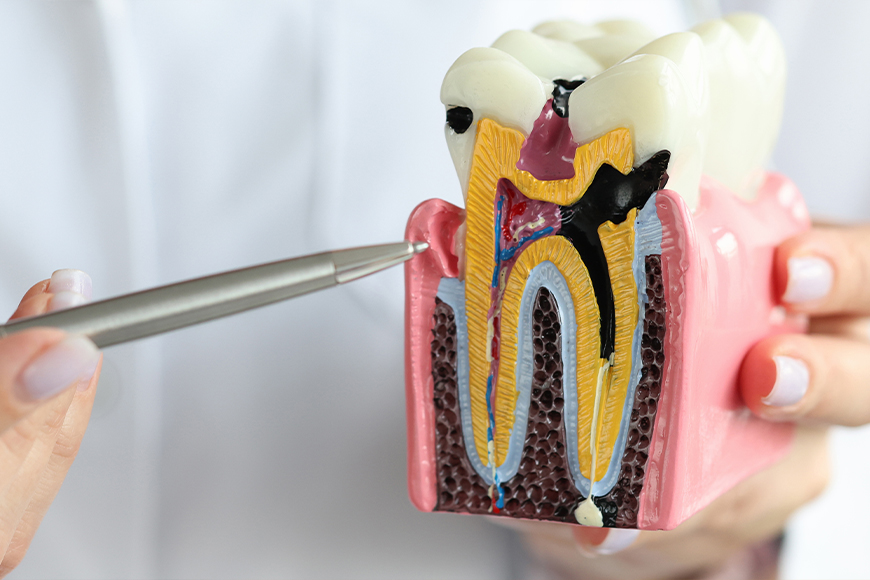
The “root canal“ is actually a part of your tooth—the hollow section that contains the nerve tissue, blood vessels, and other cells, collectively known as the pulp. When this pulp becomes infected or inflamed due to deep decay, repeated dental procedures, or a traumatic crack, the pressure inside the tooth builds up. Since the tooth is a hard structure, that pressure has nowhere to go but down into the nerves, causing excruciating pain.
An emergency root canal involves:
- Removing the infected or damaged pulp.
- Disinfecting and cleaning the canals inside the root.
- Filling and sealing the space to prevent re-infection.
- Restoring the tooth (usually with a crown) so it can function normally again.
5 Red Flags: How to Know You Need an Emergency Root Canal
Not every toothache requires a root canal, but certain symptoms indicate that the infection has reached the “point of no return.” If you experience any of the following, contact Madison Dentistry & Implant Center
1. Persistent, Throbbing Pain
This isn’t a dull ache that comes and goes. Emergency-level pain is often described as a “heartbeat in the tooth.” It may worsen when you lie down or apply pressure while chewing.
2. Extreme Sensitivity to Heat and Cold
While many people have sensitive teeth, an infection-related sensitivity lingers. If you drink hot coffee and the pain lasts for minutes—or even hours—after the cup is gone, the nerves inside the tooth are likely damaged.
3. Gum Swelling and Tenderness
Look for a small, pimple-like bump on your gums (often called a gum boil or abscess). This is a clear sign of an infection that is trying to drain. You might also notice localized swelling in your cheek or jawline.
4. Tooth Discoloration
An infected tooth can sometimes turn dark grey, black, or yellowish. This happens because the internal pulp has died, and the decaying tissue is staining the tooth from the inside out.
5. A Loose or “High” Tooth
When an infection exists at the root tip, it can cause the tooth to feel slightly loose or like it is “taller” than the surrounding teeth. This is due to the inflammation pushing the tooth slightly out of its socket.
Why Timing Matters: The Risks of Delaying Treatment
It is a common myth that if the pain goes away, the infection is gone. In reality, if the pain suddenly disappears, it often means the nerve has completely died. However, the bacteria are still there.
Left untreated, a dental infection can:
- Spread to the Jawbone: The infection can eat away at the bone supporting your teeth.
- Lead to Systemic Issues: Bacteria from a dental abscess can enter the bloodstream, potentially leading to serious conditions like sepsis or endocarditis.
- Cause Facial Disfigurement: Severe swelling (cellulitis) can spread to the neck and face, sometimes requiring hospitalization.
- Result in Tooth Loss: The longer you wait, the less likely it is that we can save the natural tooth, leading to the need for a more expensive extraction and dental implant.
The Madison Dentistry & Implant Center Difference
Located at 268 Main Street, Suite B in Madison, NJ, our clinic is designed to be a sanctuary for patients in pain. We have invested in the latest technology and specialized training to ensure your emergency root canal is as stress-free as possible.
State-of-the-Art Diagnostics
We use high-definition digital X-rays and 3D imaging to see exactly what is happening beneath the surface. This allows our specialists to map your root canals with pinpoint accuracy, ensuring no hidden bacteria are left behind.
Pain-Free Sedation Options
We know that dental anxiety is real, especially during an emergency. Madison Dentistry & Implant Center offers various sedation dentistry options. Whether you need a local anesthetic or something more to help you relax, our goal is for you to feel nothing but relief.
Same-Day Emergency Appointments
When you are in pain, you shouldn’t have to wait weeks. We reserve blocks of time in our schedule specifically for emergencies. If you live in Summit, NJ, or Florham Park, you are just a short drive away from immediate care.
Expert Endodontic Care
Our board-certified doctors are experts in “saving the unsaveable.” We combine years of clinical experience with a compassionate chairside manner, treating every patient like family.
What to Expect During Your Emergency Visit
If you’ve never had a root canal, the unknown can be scary. Here is a step-by-step look at how we handle your emergency:
- Rapid Assessment: We’ll take a targeted X-ray to confirm the source of the pain.
- Numbing the Area: We use advanced numbing techniques to ensure the area is completely “frozen” before we begin.
- Access & Cleaning: A small opening is made in the crown of the tooth. Using specialized tools, we remove the infected pulp and clean the canals.
- Sealing: The canals are filled with a biocompatible material (gutta-percha) to seal the tooth.
- Temporary Restoration: Usually, an emergency root canal ends with a temporary filling. You will return a week or two later for a permanent custom crown to restore the tooth’s strength.
Recovering from an Emergency Root Canal: Pro-Tips
Most patients feel significantly better the moment the anesthesia wears off because the source of the infection is gone. However, your body still needs time to heal.
- Stick to Soft Foods: For the first 24–48 hours, enjoy smoothies, mashed potatoes, or yogurt. Avoid crunchy or sticky foods that could dislodge your temporary filling.
- Manage Discomfort: Over-the-counter anti-inflammatories are usually sufficient to manage any minor soreness in the gums.
- Keep it Clean: Continue brushing and flossing, but be gentle around the treated tooth.
- Don’t Skip the Crown: The root canal saves the tooth, but the crown protects it. A tooth that has had a root canal is more brittle; the crown ensures it doesn’t fracture under the pressure of chewing.
Frequently Asked Questions (FAQs)
What happens if I don't get a root canal?
The only alternative to a root canal for an infected tooth is an extraction. While we also specialize in dental implants, we always believe that saving your natural tooth is the best first option for your oral health.
Can I drive myself home after the procedure?
If you only receive local anesthesia (numbing), yes. However, if you opt for certain types of sedation, you will need a friend or family member to drive you home.
How long does the procedure take?
Most emergency root canals can be completed in 60 to 90 minutes.
Will I need antibiotics?
Not always. In many cases, removing the infection at the source (the tooth) allows the body to heal on its own. If the infection has spread to the gums or jaw, our doctors will prescribe the appropriate antibiotics.
Conclusion: Emergency Root Canal Specialist
Dental pain is a signal from your body that something is wrong. Ignoring it won’t make the infection go away—it will only make the eventual treatment more complex. At Madison Dentistry & Implant Center, we are dedicated to providing the residents of Madison, NJ, and our neighboring cities with the highest standard of emergency endodontic care.
From our brand-new, state-of-the-art facility to our compassionate team of specialists, we are here to restore your health and your smile. If you are experiencing a dental emergency, don’t wait another minute. Contact us today