
Experiencing a throbbing toothache? Has your dentist delivered the news that you have a severely damaged or infected tooth? When faced with the critical decision of a Root Canal vs. Extraction, it’s natural to feel anxious and overwhelmed. This choice is one of the most pivotal you’ll make for your long-term oral health, impacting everything from your smile’s aesthetics to your ability to chew comfortably.
For residents in Madison, New Jersey, and the surrounding areas like Florham Park, Chatham, and Morristown, understanding these two common dental procedures is essential. At Madison Dentistry & Implant Center, our mission is to provide clear, expertly-guided advice to help you make an informed decision. This comprehensive guide breaks down the procedures, costs, recovery, and long-term consequences of both options, ensuring you have all the knowledge needed to save your natural tooth whenever possible.
Understanding the Procedures: Root Canal Therapy vs. Tooth Removal
The core difference between a root canal and an extraction lies in their ultimate goal: restoration versus removal. A root canal is a treatment designed to save your natural tooth, while an extraction is the complete removal of the tooth from its socket.
What is a Root Canal (Endodontic Treatment)?
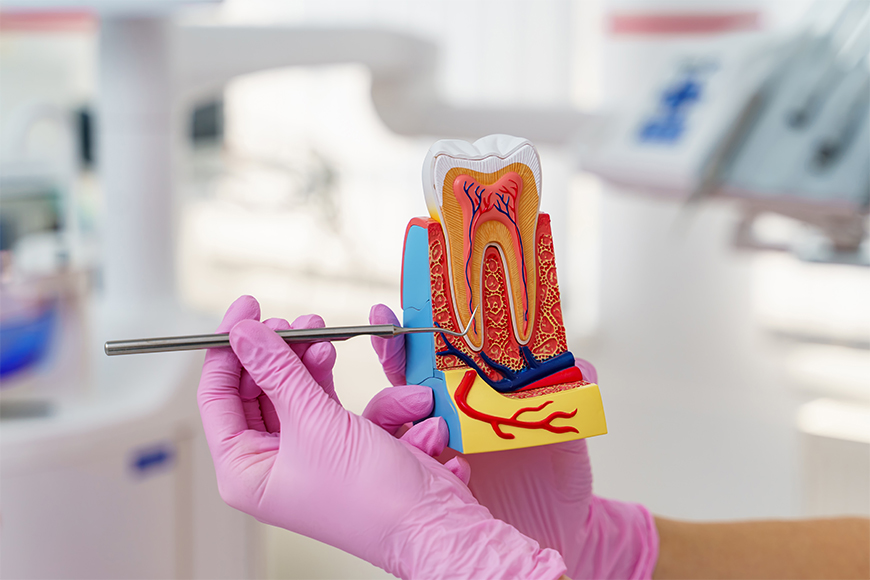
A Root Canal Treatment (RCT), or endodontic therapy, is a procedure performed to repair and save a tooth that has been badly damaged by decay or infection. The tooth’s innermost layer, called the pulp, contains nerves, blood vessels, and connective tissue. When this pulp becomes inflamed or infected—usually due to a deep cavity, crack, or injury—a root canal is necessary to eliminate the infection and preserve the tooth’s structure.
The Root Canal Procedure: A Step-by-Step Look
- Anesthesia: Local anesthesia is administered to completely numb the area, ensuring the procedure is virtually painless.
- Access: A small opening is made on the tooth’s crown to access the pulp chamber and root canals.
- Pulp Removal: The infected or damaged pulp is carefully removed from the pulp chamber and the root canals.
- Cleaning and Shaping: The canals are thoroughly cleaned, disinfected, and shaped using special instruments.
- Filling and Sealing: The cleaned canals are filled with a biocompatible material, typically a rubber-like compound called gutta-percha, and sealed.
- Restoration: The final, and crucial, step is restoring the tooth. Since a root canal-treated tooth can be more brittle, a dental crown is typically placed over it to protect it, restore its strength, and ensure it functions like a natural tooth.
What is a Tooth Extraction?
Tooth Extraction, or tooth removal, is a straightforward procedure where the entire tooth is removed from the jawbone socket. It is usually considered a last resort when a tooth is severely damaged, fractured, or decayed beyond the point where it can be saved by a root canal or other restorative procedures.
The Extraction Procedure
- Anesthesia: Local anesthesia is used to numb the tooth and surrounding gum tissue.
- Loosening: The dentist uses specialized instruments to loosen the tooth gently from the periodontal ligament that holds it in place.
- Removal: The tooth is then removed with forceps.
- Aftercare: Gauze is placed on the site to control bleeding and encourage the formation of a blood clot, which is vital for healing (preventing a painful condition known as dry socket).
The Advantages of Choosing a Root Canal
Choosing Root Canal Treatment (RCT) over extraction offers significant, long-term benefits for your oral health and overall well-being. Here is a bullet list detailing the key advantages of saving your natural tooth:
- Preserves Natural Function:
- Maintains the natural chewing and biting force you are accustomed to.
- Allows you to eat your favorite foods comfortably and confidently.
- Sustains Oral Structure & Alignment:
- Keeps your natural tooth in its socket, which prevents neighboring teeth from drifting or shifting out of alignment.
- Avoids issues with a misaligned bite that can lead to jaw pain (TMJ issues) or uneven wear on other teeth.
- Protects Jawbone Health:
- The tooth root continues to stimulate the surrounding jawbone, which is crucial for preventing bone loss (resorption) that naturally occurs after an extraction.
- Preserves the strength and density of your jawbone, maintaining your facial structure.
- Aesthetically Pleasing:
- You keep your natural smile and facial contours intact.
- The tooth is restored with a dental crown that is custom-matched to your other teeth, making it virtually indistinguishable.
- Long-Term Cost-Effectiveness:
- While the initial cost may be comparable to an extraction, a root canal eliminates the need for expensive tooth replacement procedures like dental implants or bridges down the line.
- It is the most financially prudent decision for long-term restorative care.
- Comfortable Procedure & Recovery:
- Modern painless root canal treatment is performed under effective local anesthesia, making the procedure similar to a standard filling.
- Recovery is typically short (1–3 days) with minimal discomfort, allowing for a quick return to normal activities.
- High Success Rate:
- With proper care and a final restoration (crown), the treated tooth can often last a lifetime, providing a durable and functional outcome.
Preserving Jawbone Health and Tooth Alignment
One of the most critical, yet often overlooked, advantages of choosing a root canal in Madison, NJ, is the preservation of your jawbone. Your tooth root constantly stimulates the surrounding jawbone. When a tooth is extracted, this essential stimulation ceases, leading to bone atrophy or bone loss. Over time, this loss can compromise the stability of neighboring teeth and even alter your facial structure. Keeping your natural tooth with a root canal prevents this serious complication.
Cost-Effectiveness: A Long-Term View
While the initial cost of a root canal and crown may be higher than a simple extraction, you must consider the necessary follow-up for an extraction. A missing tooth requires replacement—either with a dental implant, a dental bridge, or a partial denture—to prevent dental shifting and bone loss.
- Initial Cost: Extraction is often lower.
- Long-Term Cost: Extraction + Tooth Replacement (Implant/Bridge) is significantly higher than a Root Canal + Crown.
For most patients, the Root Canal vs. Extraction cost analysis clearly favors saving the tooth for long-term financial health and functionality.
When is Extraction Truly Necessary?
While saving the tooth is always the goal, there are instances where an infected tooth extraction becomes the only viable option. These are typically situations where the tooth is deemed “non-restorable.”
- Severe Structural Damage: A tooth that is fractured or cracked deep below the gumline into the root is often irreparable, as the infection cannot be completely sealed.
- Advanced Periodontal Disease: If gum disease has severely compromised the supporting bone structure, the tooth may be too loose to be saved or restored, regardless of the pulp’s health.
- Failed Root Canal: In rare cases, a root canal may fail, and a subsequent procedure (endodontic retreatment or apicoectomy) is not feasible or successful.
- Medical Compromise: For patients with certain severe medical conditions or those undergoing specific treatments (like radiation therapy), extraction may be safer to eliminate a chronic infection risk quickly.
If you are concerned about your tooth’s viability, the expert team at Madison Dentistry & Implant Center will perform a thorough examination, including digital X-rays, to accurately assess the extent of the damage and recommend the most predictable and conservative treatment plan.
Practical Decision-Making: Tips and Considerations
Making the best decision between a root canal vs. tooth extraction requires a clear, informed partnership with your dentist. Here are practical tips to guide your choice:
Tip 1: Seek an Expert Evaluation
Always consult with a dentist who specializes in restorative and implant dentistry. The diagnostic process is crucial. A simple tooth extraction may seem easier, but a meticulous evaluation will determine if enough healthy tooth structure remains to support a long-lasting restoration.
Tip 2: Plan for the Missing Tooth (If Choosing Extraction)
If an extraction is unavoidable, commit immediately to a tooth replacement plan. Leaving a gap is detrimental to your overall oral health. Dental implants in Madison, NJ, are the gold standard for tooth replacement, as they replicate the root, stimulating the jawbone and preventing bone loss.
Tip 3: Don’t Base Your Decision on Fear of Pain
Modern dental technology has revolutionized both procedures. The stereotype of a painful root canal is simply outdated. Both root canals and extractions are performed using effective local anesthesia. Patients often report that the severe pain before the procedure is far worse than the treatment itself. In fact, many people who opt for a root canal report it feeling no different than receiving a routine filling!
Local Focus: Your Best Choice in Madison, NJ
When dealing with a compromised tooth, proximity and expertise matter. For those in Madison, Florham Park, Chatham, or Morristown, trusting your care to a leading local provider simplifies the process and ensures high-quality, long-term results.
At Madison Dentistry & Implant Center, we prioritize Painless Root Canal Treatment and minimally invasive techniques to save your natural teeth. Our practice is equipped with advanced diagnostic tools to precisely determine your tooth’s condition and create a personalized plan. We believe that preserving your natural tooth is the best foundation for a healthy, functioning smile.
Frequently Asked Questions (FAQ)
Is a Root Canal really painless?
Yes. Thanks to modern local anesthetics and advanced techniques, the procedure is typically no more uncomfortable than having a deep filling. The goal of the procedure is to eliminate the source of the pain—the infected pulp—providing immediate relief.
How long does a tooth last after a Root Canal?
With proper restoration (usually a crown) and good oral hygiene, a tooth treated with a root canal can last a lifetime. Routine check-ups are essential to monitor the tooth and surrounding gums.
Will my face change if I get a tooth extracted?
In the short term, no. However, over many years, if the extracted tooth is not replaced, the underlying jawbone will start to shrink (bone loss). This can, over time, lead to a sunken or aged appearance around the mouth and lower face. Replacing the tooth with a dental implant prevents this.
Can I just leave the infected tooth alone?
Absolutely not. Ignoring a severely decayed or infected tooth is extremely dangerous. The infection (often resulting in a dental abscess) will not resolve on its own. It can spread to the jawbone, neighboring teeth, and even enter the bloodstream, leading to serious, potentially life-threatening systemic health issues. Emergency dental care is required immediately for a severe tooth infection.
Summary: Root Canal vs Extraction
The debate of Root Canal vs. Extraction is best resolved with one clear principle: Save your natural tooth whenever possible.
A root canal preserves your natural dentition, maintains your jawbone health, stabilizes your bite, and is often the most cost-effective solution in the long run. An extraction is reserved for teeth that are fractured or damaged beyond repair.
If you are in Madison, New Jersey, or the Florham Park, Chatham, or Morristown areas and are facing this important dental decision, don’t delay. The sooner you act, the higher the chance of saving your tooth. Contact Madison Dentistry & Implant Center today for a comprehensive evaluation. Let us help you keep your natural, healthy smile for years to come!