
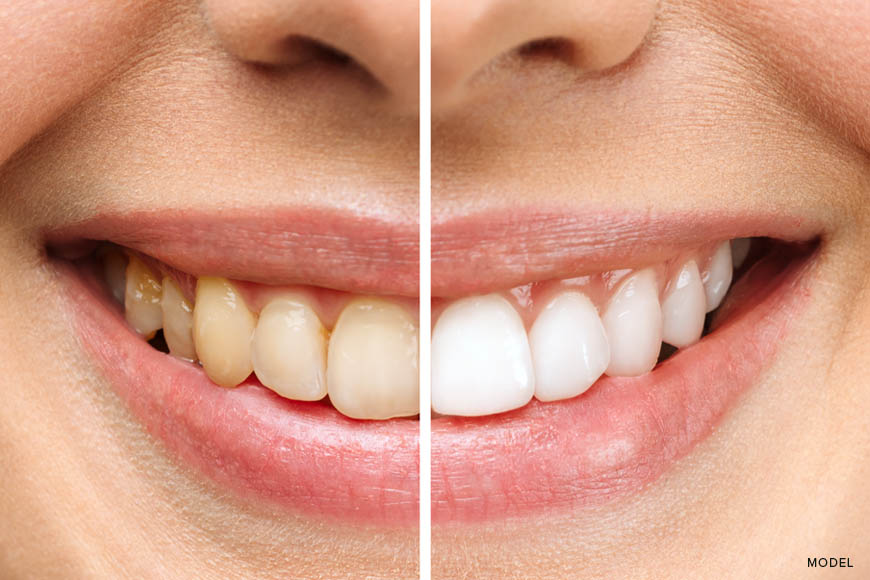
A bright, white smile can boost your confidence, but tooth discoloration is common. Over time, daily habits, aging, certain medications, and other factors can change the color of your teeth.
Not all tooth stains are the same. Understanding the type and cause of your discoloration is an important first step toward determining which treatment may be appropriate. Here is a breakdown of common types of tooth stains and the professional treatments that may help improve their appearance.
The Main Types of Teeth Stains
1. Extrinsic Stains (Surface Stains)
Extrinsic stains affect the outer surface of the tooth and are among the most common causes of tooth discoloration. They can be caused by dark-colored foods and beverages, such as coffee, tea, red wine, and berries, as well as tobacco use and inadequate oral hygiene.
Because these stains are located primarily on the tooth’s surface, professional cleaning and teeth whitening may help improve their appearance.
2. Intrinsic Stains (Deep Stains)
Intrinsic stains develop within the tooth structure and can affect the dentin beneath the enamel. They may result from factors such as dental trauma, certain medications taken during tooth development, or excessive fluoride exposure during childhood, which can cause dental fluorosis.
Because intrinsic discoloration occurs within the tooth rather than solely on its surface, conventional whitening may have limited results depending on the cause and severity of the discoloration. A dentist can evaluate the underlying cause and recommend an appropriate cosmetic treatment.
3. Age-Related Discoloration
As we age, enamel naturally becomes thinner and can become more translucent, allowing more of the naturally yellowish dentin underneath to show through. Years of exposure to staining foods, beverages, and tobacco can also contribute to discoloration.
As a result, age-related tooth discoloration may involve a combination of surface staining and changes within the tooth structure.
Professional Solutions for Tooth Discoloration
Brushing, cleaning between your teeth, maintaining regular dental visits, and limiting stain-causing foods and beverages can help reduce and prevent surface staining. However, some discoloration may require professional cosmetic treatment.
Treatment | Best For | Description |
Professional Teeth Whitening | Extrinsic & Some Intrinsic Stains | Uses professional whitening agents to lighten tooth discoloration. Results vary depending on the type and cause of the stain. |
Dental Bonding | Some Intrinsic Discoloration & Minor Cosmetic Concerns | Applies tooth-colored composite resin to the tooth surface to conceal discoloration and can also reshape teeth with minor chips or imperfections. |
Porcelain Veneers | Certain Intrinsic & Tetracycline-Related Discoloration | Custom-made, thin shells bonded to the front surfaces of teeth to improve their color, shape, and overall appearance. |
Dental Crowns | Severely Stained or Damaged Teeth | Tooth-shaped restorations that cover the tooth and may be recommended when significant discoloration is accompanied by structural damage. |
The best treatment depends on the cause and severity of the discoloration, as well as the health and condition of your teeth.
Brighten Your Smile with Madison Dentistry & Implant Center
If you are looking to improve the appearance of stubborn tooth discoloration and achieve a brighter, healthier-looking smile, Madison Dentistry & Implant Center can help you explore your options.
From professional teeth whitening to cosmetic treatments such as dental bonding and porcelain veneers, our team provides personalized recommendations based on your teeth, oral health, and aesthetic goals.
Ready for a brighter smile?
Call us today at 973-822-8003 or visit our contact page to schedule your consultation.
Frequently Asked Questions About Tooth Stains
1. Why aren’t my teeth whitening strips working on my stains?
Over-the-counter whitening strips are primarily designed to address surface discoloration. If your tooth discoloration is intrinsic, caused by certain medications or trauma, or related to significant age-related changes, whitening products may provide limited results.
A dentist can determine the cause of the discoloration and recommend an appropriate treatment option.
2. Can intrinsic stains be whitened naturally at home?
Intrinsic discoloration cannot be removed simply through DIY whitening remedies. Because the discoloration occurs within the tooth structure, at-home remedies may not address the underlying cause.
Some abrasive products, including certain charcoal toothpastes, may also wear away enamel when used excessively. Talk to your dentist before using DIY whitening treatments, particularly if you have persistent or unexplained discoloration.
3. How long do professional teeth whitening results last?
The longevity of professional whitening results varies from person to person. Your diet, oral hygiene, tobacco use, and natural changes in tooth color can all affect how long your results last.
Maintaining good oral hygiene, limiting stain-causing foods and beverages, avoiding tobacco, and following your dentist’s recommendations can help maintain your results.
4. Are teeth whitening treatments safe for my enamel?
Professional teeth whitening is generally considered safe when performed or supervised by a dental professional. Your dentist can select an appropriate whitening treatment and concentration based on your individual needs and monitor you for potential sensitivity or gum irritation.
Whitening treatments should be used as directed, as overuse can increase the risk of tooth sensitivity and other side effects.
5. What causes yellow spots or white patches on teeth?
White patches can have several causes, including dental fluorosis, enamel demineralization, or other changes to the enamel. Yellow spots may be associated with surface staining, enamel thinning, or other forms of discoloration.
Because the appearance of a spot does not always reveal its underlying cause, a dentist should evaluate persistent or unusual discoloration before treatment. Depending on the cause, treatments such as bonding or other cosmetic procedures may be considered.