

We have all been there, or at least we all dread being there. It usually starts as a faint twinge—a slight sensitivity when you sip your morning coffee or bite into something sweet. But then, seemingly overnight, that twinge escalates into a relentless, throbbing ache that makes it impossible to sleep, work, or even think clearly. When a severe toothache strikes, you know you need professional help fast.
As you sit in the dental chair, your dentist takes an X-ray and delivers the news: your tooth is severely infected or damaged. Now, you are faced with a significant dental crossroad: Do you save the tooth with a root canal, or do you pull it out with a tooth extraction? Root Canal vs Tooth Removal.
At Madison Dentistry & Implant Center, we know how overwhelming this decision can be. Our goal is to empower our patients across Madison, New Jersey, and the surrounding communities with the knowledge they need to make confident, informed decisions about their oral health. Let’s dive deep into the “root canal vs tooth removal” debate, exploring the procedures, pros, cons, and how to choose the right path for your unique smile.
Understanding the Root of the Problem
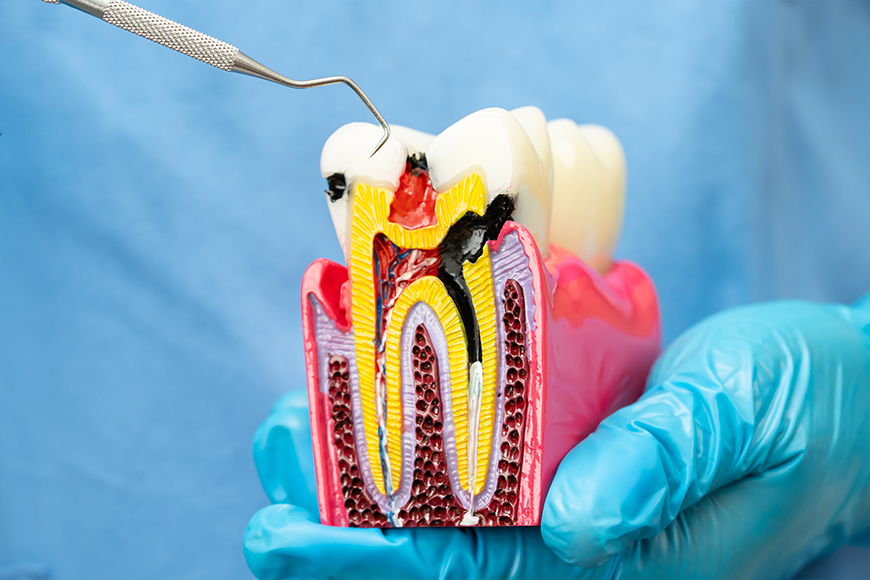
Before we compare the treatments, it is crucial to understand why you are in this position. Deep inside your tooth lies the pulp—a soft tissue containing nerves, blood vessels, and connective tissue. When a tooth suffers from deep decay, repeated dental procedures, a faulty crown, or a crack from a traumatic injury, bacteria can penetrate this inner sanctum.
Once the pulp becomes infected or inflamed, the pain can be excruciating. If left untreated, the infection can spread, leading to a dental abscess, bone loss, and even systemic health issues. At this critical juncture, your dentist must intervene to stop the infection and relieve your pain. The two primary methods for doing this are root canal therapy and tooth extraction.
What is a Root Canal?
A root canal (technically called endodontic therapy) is a tooth-saving procedure. The objective is to remove the infected or inflamed pulp from the inside of the tooth, clean and disinfect the root canals, and then seal the space to prevent future bacterial invasion.
The Root Canal Procedure: Step-by-Step
- Numbing the Area: Local anesthesia is administered to ensure you are completely comfortable and pain-free throughout the procedure.
- Creating an Opening: Your dentist creates a small opening in the crown of the tooth to access the infected pulp.
- Cleaning and Shaping: Using specialized tiny instruments, the diseased pulp is carefully removed. The empty canals are then cleaned, shaped, and disinfected.
- Filling the Canals: The cleaned space is filled with a biocompatible, rubber-like material called gutta-percha.
- Restoring the Tooth: A temporary filling is usually placed to close the opening. In most cases, a dental crown is later placed over the tooth to restore its strength, functionality, and appearance.
The Pros of a Root Canal
- Saves Your Natural Tooth: Nothing looks, feels, or functions quite like your natural tooth. Preserving it maintains your natural bite and chewing power.
- Prevents Jawbone Deterioration: When you lose a tooth, the jawbone in that area can begin to shrink (resorb) due to lack of stimulation. Keeping the tooth root intact prevents this.
- Keeps Surrounding Teeth Aligned: Extracting a tooth creates a gap, which can cause adjacent teeth to shift out of place, leading to bite alignment issues.
- Cost-Effective in the Long Run: While the upfront cost of a root canal and crown might seem higher than an extraction, it is almost always less expensive than extracting a tooth and replacing it with a dental implant or bridge later.
The Cons of a Root Canal
- Multiple Visits: The procedure and the subsequent placement of a permanent crown may require two or more dental visits.
- Potential for Re-infection: Though highly successful (with a success rate of over 95%), there is a small chance a root canal could fail if the tooth develops new decay or if a hidden canal was missed.
What is a Tooth Removal?
A tooth extraction is exactly what it sounds like: the complete removal of the problematic tooth from its socket in the bone.
The Extraction Procedure: Step-by-Step
- Numbing the Area: Just like with a root canal, your dentist will use local anesthesia to numb the area. For more complex extractions, sedation may be offered.
- Loosening the Tooth: The dentist uses a specialized tool called an elevator to gently loosen the tooth within its socket.
- Removing the Tooth: Forceps are then used to carefully extract the tooth.
- Aftercare: A blood clot will form in the socket. Your dentist will provide a gauze pad to bite down on to stop the bleeding and give you detailed post-operative instructions.
The Pros of a Tooth Extraction
- Immediate Eradication of Infection: Removing the tooth completely removes the source of the severe infection.
- Lower Initial Cost: An extraction is generally cheaper upfront than a root canal and crown.
- Quicker Procedure: A simple extraction is usually faster than a multi-step root canal.
The Cons of a Tooth Extraction
- The Gap Factor: Leaving an empty space in your smile can cause neighboring teeth to drift, leading to crooked teeth and a misaligned bite.
- Bone Loss: Without a tooth root to stimulate the jaw, bone density in the area will decrease over time.
- Hidden Future Costs: To prevent shifting teeth and bone loss, the extracted tooth must eventually be replaced with a dental implant, bridge, or denture. These replacement options are often significantly more expensive than saving the original tooth with a root canal.
Root Canal vs Tooth Removal: How to Decide?
At Madison Dentistry & Implant Center, our philosophy is rooted in preservation. As a general rule of thumb, it is almost always better to save your natural tooth whenever possible. However, every patient’s situation is unique. Here are the main factors we evaluate when helping you decide:
1. The Condition of the Tooth
If the tooth has healthy bone support and enough remaining structure to support a crown, a root canal is the clear winner. However, if the tooth is severely fractured down to the gum line, split in half, or has extensive bone loss due to severe periodontal disease, it may be unsalvageable. In these cases, an extraction is the only viable option.
2. Long-Term Financial Considerations
Many patients are tempted to choose extraction simply because the upfront cost is lower. This is a common misconception that ends up costing more down the line. If you pull a tooth, you will eventually need to replace it to maintain your facial structure and chewing ability. A dental implant—which is the gold standard for tooth replacement—involves surgery and multiple components (the post, the abutment, and the crown), making it a much larger investment than a root canal.
3. Healing and Recovery
Root canals actually have a surprisingly quick recovery time. Most patients feel immediate relief from the toothache that brought them in, and post-procedure discomfort is usually managed with over-the-counter pain relievers for a day or two. Tooth extraction recovery takes a bit longer, requiring you to eat soft foods, avoid straws (to prevent the painful condition known as dry socket), and allow the gum tissue to heal completely over several weeks.
Proudly Serving Madison, NJ and Beyond
Choosing between a root canal and a tooth extraction requires the expert eye of a trusted dental professional. At Madison Dentistry & Implant Center, located right in the heart of Madison, NJ, we utilize state-of-the-art technology, including 3D imaging, to accurately diagnose your tooth and recommend the most effective, pain-free treatment plan.
Whether you are a local Madison resident or coming to us from surrounding communities like Chatham, Florham Park, Morristown, Harding, or Summit, our compassionate team is dedicated to providing you with top-tier, comfortable care. If an extraction is necessary, we specialize in seamless dental implant procedures to restore your smile to its full glory.
TL;DR: The Key Takeaways
Short on time? Here is what you need to know:
- Always try to save the tooth: A natural tooth is superior to any artificial replacement. If it can be saved with a root canal, that is usually the best medical route.
- Root canals relieve pain, they don’t cause it: Modern anesthesia makes root canals highly comfortable. The procedure cures the severe pain caused by the tooth infection.
- Extractions have hidden costs: While pulling a tooth is cheaper today, replacing that tooth with a necessary implant or bridge later will cost significantly more than a root canal would have.
- Extractions are for unsalvageable teeth: If a tooth is cracked below the gumline or lacks bone support, extraction is the safest option.
Frequently Asked Questions (FAQs)
Does a root canal hurt more than an extraction?
No! This is a major myth. Thanks to modern dental technology and anesthetics, a root canal feels very similar to getting a standard filling. Most of the pain associated with a root canal is actually the pain of the infection before the procedure.
Can I just have the tooth pulled and not replace it?
We highly advise against leaving a gap. Over time, your other teeth will shift into the empty space, altering your bite, causing jaw pain (TMJ), and making your remaining teeth harder to clean. It also leads to jawbone deterioration.
How long does a root canal last?
With proper oral hygiene—brushing twice a day, flossing, and attending regular dental checkups—a tooth treated with a root canal and protected by a high-quality crown can last a lifetime.
What if I have dental anxiety about either procedure?
Dental anxiety is incredibly common, and we completely understand. At Madison Dentistry & Implant Center, we offer various sedation dentistry options to ensure you are relaxed, calm, and pain-free during your visit.
Conclusion: Root Canal vs Tooth Removal
Dealing with a severe toothache can be terrifying, but you do not have to face it alone or make decisions in the dark. While tooth extractions have their place in dentistry for severely damaged teeth, saving your natural tooth with a root canal is almost always the preferred choice for your long-term health, comfort, and wallet.
Don’t let dental pain dictate your life or compromise your beautiful smile. If you are experiencing tooth pain or have been told you need a major dental procedure, we are here to offer a second opinion or immediate relief.
Are you ready to reclaim your oral health? Contact Madison Dentistry & Implant Center today to schedule your consultation. Proudly serving Madison, Chatham, Morristown, and the surrounding New Jersey areas, our expert team is ready to help you smile with confidence again.