
You finally got that painful tooth fixed. You sat through the root canal procedure, breathed a sigh of relief when the numbness wore off, and thought you were entirely out of the woods. But fast forward a few months—or perhaps even a few years—and a familiar, throbbing ache starts creeping back into the exact same tooth.
Your heart sinks, and you find yourself frantically searching online: Can a root canal get infected?
The short and honest answer is yes. While root canal therapy has an incredibly high success rate (often over 95%), there is a small margin where the tooth can become re-infected. This is known in the dental world as a “failed root canal” or a “secondary infection.”
If you live in Morris County and are experiencing unexpected tooth pain, don’t panic. The expert team at Madison Dentistry & Implant Center in Madison, New Jersey, is here to guide you through exactly why this happens, what signs to look out for, and how we can restore your smile.
The Basics: What Actually Happens During a Root Canal?
To understand how a root canal can get infected, we first need to understand what the procedure actually entails.
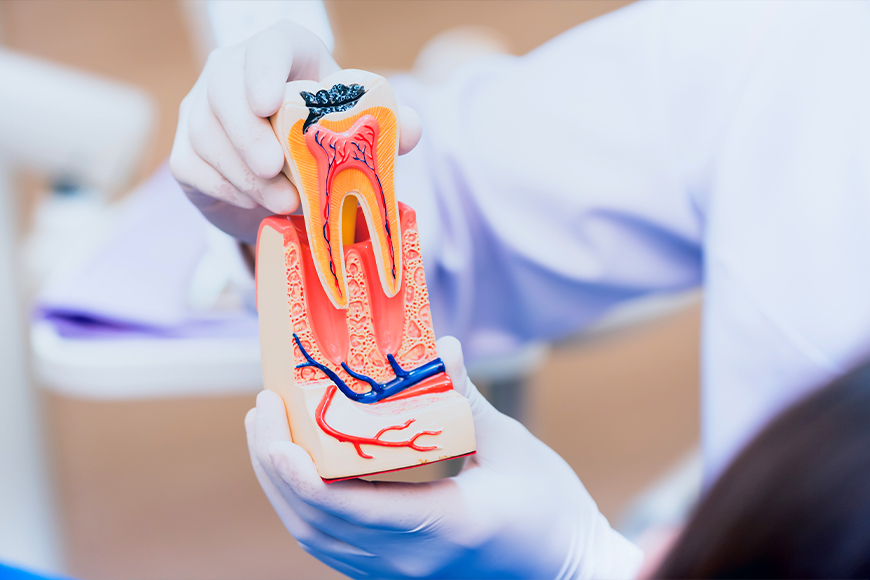
Deep inside your tooth, beneath the hard white enamel and the dentin layer, lies soft tissue called the pulp. This pulp contains blood vessels, nerves, and connective tissue. When a tooth is severely decayed or cracked, bacteria can penetrate this inner sanctum, causing a painful pulp infection.
During a root canal, your dentist or endodontist drills into the tooth, removes the infected or dead pulp, meticulously cleans and shapes the tiny root canals, and then fills the space with a rubber-like material called gutta-percha. Finally, the tooth is sealed, usually with a permanent dental crown, to protect it from further damage.
The goal is to save your natural tooth and eliminate the bacteria. However, the microscopic anatomy of a tooth is highly complex, which leaves a slight window for future issues.
Why Do Root Canals Get Infected? (The Common Causes)
If the infected tissue was removed, how does an infection come back? A secondary infection usually occurs due to one of the following reasons:
1. Complex Root Anatomy and Hidden Canals
Teeth are not perfectly uniform. Some teeth, especially molars, have complex, curved, or incredibly narrow root canals. Sometimes, a tooth may even have an extra, hidden canal that doesn’t show up on a standard X-ray. If even microscopic bacteria are left behind in a missed canal during the initial procedure, they can multiply and cause a new infection months or years later.
2. Delays in Placing the Permanent Crown
After the internal cleaning is done, a temporary filling is usually placed until your permanent crown is fabricated. This temporary filling is exactly that—temporary. It is not designed to withstand long-term chewing or keep out bacteria indefinitely. If there is a significant delay in getting your permanent crown placed, bacteria from your saliva can leak back into the treated tooth, contaminating the root canal system.
3. A Damaged Restoration
Even if your root canal was flawless, the crown or filling protecting it won’t last forever. Over time, dental restorations can crack, chip, or loosen. When the seal of the crown is compromised, it acts as an open door for food particles and bacteria to bypass your tooth’s natural defenses and re-infect the root.
4. Salivary Contamination During the Procedure
During a root canal, the tooth must remain completely isolated and dry. If the dental dam (the protective sheet used to isolate the tooth) shifts, or if saliva contaminates the inside of the tooth before it is completely sealed, bacteria can be sealed inside the tooth, leading to eventual failure.
5. New Tooth Decay
A tooth that has had a root canal is no longer “alive” in the traditional sense, but it is still made of natural tooth structure. If you develop new cavities at the gumline or around the edges of the crown, that decay can progress rapidly and reach the root canals, sparking a fresh infection.
Signs and Symptoms You Shouldn't Ignore
How do you know if you are dealing with a secondary infection? The symptoms of an infected root canal can range from a dull annoyance to severe agony.
If you experience any of the following, it is crucial to schedule an appointment at Madison Dentistry & Implant Center right away:
- Pain When Biting or Chewing: A healthy root-canaled tooth should feel exactly like your other teeth. If you experience a sharp, zingy pain or a deep, throbbing ache when you apply pressure to the tooth, it is a massive red flag.
- Swollen Gums or Facial Swelling: Swelling in the gums around the affected tooth—or swelling that extends to your jaw or face—indicates that an infection has spread past the roots and into the surrounding bone and tissue.
- A “Pimple” on the Gums: A small, pimple-like bump on your gums (known as an abscess or fistula) is a sign that your body is trying to drain pus from an underlying infection. You might even notice a bad taste in your mouth if it ruptures.
- Constant, Unexplained Ache: While temperature sensitivity (hot/cold) is rare since the nerve is gone, a constant, dull ache that radiates through your jaw is a common symptom of a hidden infection.
- Lethargy and Fever: If the localized infection enters your bloodstream, you may develop a fever, swollen lymph nodes, and a general feeling of fatigue. This is a dental emergency.
What to Do If You Suspect an Infection
If you suspect your root canal is infected, do not wait. Dental infections do not cure themselves. Unlike a scrape on your arm, your body cannot send antibodies inside an empty, root-canaled tooth to fight off bacteria because there is no longer a blood supply inside the tooth.
Actionable Steps:
- Call Your Dentist: This is step one. If you are in Madison, Morristown, Florham Park, Summit, or Chatham, call Madison Dentistry & Implant Center to schedule an emergency evaluation.
- Manage the Pain Safely: Take over-the-counter anti-inflammatory medication (like Ibuprofen) to manage pain and swelling while you wait for your appointment.
- Use Warm Salt Water: Gently rinse your mouth with warm salt water to help soothe inflamed gum tissue.
- Avoid Hard Foods: Chew on the opposite side of your mouth to prevent putting pressure on or fracturing the weakened tooth.
Treatment Options for a Failed Root Canal
The good news is that an infected root canal does not automatically mean you have to lose the tooth. At Madison Dentistry & Implant Center, we offer several advanced treatments to address secondary infections, ensuring we find the right solution for your specific anatomy and needs.
Endodontic Retreatment
In most cases, the first line of defense is a retreatment. This is essentially a “do-over” of the original procedure. We will remove the crown and the old packing material, meticulously search for any hidden or missed canals using advanced magnification, thoroughly clean and disinfect the entire area, and reseal it. Retreatment has a very high success rate and allows you to keep your natural tooth.
Apicoectomy (Root-End Surgery)
If an infection persists even after retreatment, or if there is a severe blockage in the root canal, we may perform an apicoectomy. During this minor surgical procedure, we access the root of the tooth directly through the gum tissue. We remove the infected tissue along with the very tip of the root, seal the end of the root, and suture the gums back in place.
Tooth Extraction and Dental Implants
Sometimes, a tooth is simply too severely cracked or the infection is too extensive to save it. If the tooth must be extracted to protect your overall health, our team specializes in seamless extraction and replacement.
As a premier implant center in Madison, NJ, we can replace the lost tooth with a state-of-the-art dental implant. An implant mimics your natural tooth root, preventing bone loss and providing a permanent, durable, and natural-looking replacem
How to Prevent Root Canal Infections
While you can’t control complex root anatomy, you can take proactive steps to ensure the longevity of your root canal treatment:
- Don’t skip the crown: Get your permanent restoration placed exactly when your dentist advises.
- Practice impeccable oral hygiene: Brush twice a day with fluoride toothpaste and floss daily to prevent new decay around the crown.
- Wear a nightguard: If you grind your teeth at night (bruxism), a custom nightguard can prevent you from cracking your crown and exposing the root to bacteria.
- Keep up with routine checkups: Visit us at Madison Dentistry & Implant Center every six months. Regular X-rays allow us to spot microscopic signs of failure long before you feel any pain.
TL;DR: The Key Takeaways
Short on time? Here is what you need to remember:
- Yes, a root canal can get infected. This can happen months or years after the original procedure.
- Causes include complex root anatomy, cracked crowns, delayed final restorations, or new decay.
- Watch out for pain when chewing, swollen gums, a pimple on the gum line, or facial swelling.
- Don’t wait! Dental infections won’t heal on their own. Seek professional help immediately.
- Treatments range from root canal retreatment to apicoectomy, or extraction followed by a dental implant.
Frequently Asked Questions (FAQs)
How long after a root canal can a tooth get infected?
An infection can occur at any time. It might happen a few weeks after the procedure if the tooth wasn’t fully cleaned, or it could happen a decade later if the protective dental crown cracks or breaks.
Can antibiotics fix an infected root canal?
No. Antibiotics can help manage the systemic spread of the infection and reduce severe swelling, but they cannot cure the infection at its source. Because the blood supply to the inside of the tooth has been removed, antibiotics cannot reach the bacteria hiding inside the root canals. Physical dental treatment is required.
Is an infected root canal considered a dental emergency?
Yes. If left untreated, the infection can spread to your jawbone, surrounding teeth, and even into your bloodstream, which can become life-threatening. If you have swelling or severe pain, contact an emergency dentist immediately.
Conclusion: Can a Root Canal Get Infected
Realizing that a previously treated tooth is infected can be incredibly frustrating. However, modern dentistry offers fast, comfortable, and effective solutions to eliminate the infection and save your smile.
Whether you need a complex endodontic retreatment or a beautifully crafted dental implant to replace a failing tooth, Madison Dentistry & Implant Center is your trusted local partner. Serving the communities of Madison, Chatham, Morristown, Florham Park, and Summit, our team utilizes state-of-the-art technology to diagnose the root cause of your pain and deliver compassionate, top-tier care.
Are you experiencing signs of an infected root canal? Don’t wait for the pain to worsen. Contact Madison Dentistry & Implant Center today to schedule your consultation and get back to living pain-free! If you found this article helpful, feel free to share it with friends and family, or leave a comment below with any questions you might have. Schedule an appointment today