
Picture this: you are enjoying a relaxing dinner at your favorite restaurant in Madison, New Jersey. You bite down on a piece of crusty artisanal bread or mistakenly chomp onto an unpopped popcorn kernel, and suddenly—zing. A sharp, shooting pain radiates through your jaw. The pain fades quickly, leaving you to wonder if you imagined it. But the next time you take a sip of your ice water, the intense sensitivity returns.
If this scenario sounds familiar, you are not alone. You might be dealing with a cracked tooth.
At Madison Dentistry & Implant Center, we see patients every week who are suffering from the subtle, yet agonizing, effects of cracked teeth. Because the cracks are often microscopic, they don’t always show up on standard dental X-rays, making them incredibly frustrating for patients.
In this comprehensive guide, we will explore exactly what happens when you crack a tooth, the hidden symptoms to watch out for, actionable steps to take immediately, and how our expert team in Madison, NJ, can restore your smile.
The Anatomy of a Cracked Tooth: Why Does It Hurt?
To understand why a cracked tooth causes such erratic pain, you have to understand the anatomy of your tooth. Your teeth consist of three main layers:
- Enamel: The hard, protective outer shell.
- Dentin: The softer, sensitive middle layer.
- Pulp: The inner core containing nerves and blood vessels.
When the outer enamel cracks, the pressure of chewing causes the crack to open and close slightly. This microscopic movement irritates the sensitive pulp deep inside. When you release your bite, the crack snaps shut, resulting in a sharp, fleeting jolt of pain. Over time, the pulp can become permanently damaged or infected, turning that fleeting pain into a constant, throbbing ache.
Identifying the 5 Types of Cracked Teeth
Not all tooth cracks are created equal. Depending on the severity and location, dentists categorize them into five main types:
- Craze Lines: These are tiny, superficial cracks limited only to the outer enamel. They are extremely common, usually painless, and require no treatment beyond cosmetic adjustments if desired.
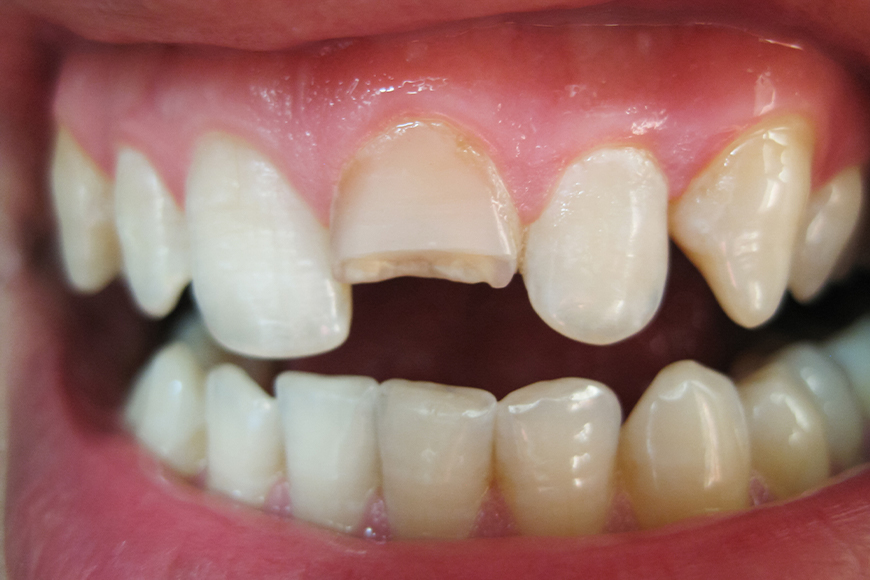
- Fractured Cusp: This occurs when a piece of the tooth’s chewing surface (the cusp) breaks off. It usually happens around large dental fillings. Because it rarely reaches the pulp, it is typically not excessively painful.
- Cracked Tooth: A true cracked tooth features a fracture that extends from the chewing surface vertically down toward the root. If caught early, the tooth can be saved. If the crack extends below the gum line, it becomes much harder to treat.
- Split Tooth: If a cracked tooth is left untreated, it will eventually progress into a split tooth. The tooth is literally split into two distinct segments. At this stage, the entire tooth cannot be saved intact.
- Vertical Root Fracture: These cracks begin at the root of the tooth and extend upward toward the chewing surface. They often show minimal symptoms at first and are frequently discovered only when the surrounding bone and gum become infected.
What Causes a Tooth to Crack in the First Place?
You might think that only a severe blow to the face can crack a tooth, but everyday habits are often the real culprits. Common causes include:
- Chewing Hard Foods: Ice, hard candy, nuts, and popcorn kernels are notorious tooth-breakers.
- Bruxism (Teeth Grinding): Chronic grinding or clenching puts immense, unnatural pressure on your teeth, eventually causing them to fracture.
- Large Fillings: Teeth with large amalgam (silver) fillings have less natural tooth structure, making them structurally weaker over time.
- Extreme Temperature Changes: Eating something very hot (like soup) and immediately drinking something freezing cold (like ice water) can cause the enamel to expand and contract too rapidly, leading to micro-fractures.
- Age: Simply getting older makes teeth more brittle. The majority of cracked teeth occur in people over the age of 50.
Symptoms: How Do You Know If You Have a Cracked Tooth?
Unlike a cavity, which usually causes a steady ache, cracked tooth syndrome is erratic. Look out for these telltale signs:
- Pain when chewing or biting, particularly when you release the biting pressure.
- Extreme sensitivity to hot, cold, or sweet foods and beverages.
- Intermittent pain that comes and goes, making it difficult to pinpoint which tooth is actually hurting.
- Swollen gums restricted to a small area around a specific tooth.
Actionable Tips: What to Do Immediately
If you suspect you have cracked a tooth, taking immediate action can prevent further damage and alleviate pain until you can get to the dentist:
- Rinse Gently: Swish with warm salt water to clean the area and reduce inflammation.
- Cold Compress: Apply a cold pack to the outside of your cheek to minimize swelling and numb the pain.
- Avoid Certain Foods: Stop eating hard, crunchy, or extremely hot/cold foods. Chew on the opposite side of your mouth.
- Take OTC Pain Relievers: Over-the-counter anti-inflammatories like Ibuprofen can help manage the discomfort.
- Call the Dentist: A cracked tooth will not heal on its own. It is considered a dental emergency.
Expert Treatment Options at Madison Dentistry & Implant Center
The treatment for your cracked tooth depends entirely on the size, location, and severity of the crack. When you visit Madison Dentistry & Implant Center, our priority is to relieve your pain and save your natural tooth whenever possible.
Here is how we fix a cracked tooth:
- Dental Bonding: For minor cracks and fractured cusps, we use a tooth-colored composite resin to fill the crack and restore the tooth’s shape.
- Dental Crowns: If the crack is substantial but hasn’t reached the nerve, we will place a beautiful, custom-milled porcelain crown over the tooth. This holds the cracked pieces together like a splint and restores your biting strength.
- Root Canal Therapy: If the crack extends deep into the pulp chamber, the tissue will become infected. We will carefully remove the damaged nerve, clean the canal, and cap the tooth with a crown to save it.
- Extraction and Dental Implants: If the tooth is a split tooth or has a severe vertical root fracture, it unfortunately must be extracted. However, as an Implant Center, we specialize in seamlessly replacing the lost tooth with a state-of-the-art dental implant that looks, feels, and functions exactly like your natural tooth.
Serving Our Neighbors in Morris County and Beyond
When you are in pain, you want reliable, expert care close to home. Madison Dentistry & Implant Center is conveniently located right in the heart of Madison, New Jersey.
We are proud to be the trusted dental emergency and restorative care destination not just for Madison residents, but for our neighbors in the surrounding communities. Whether you are driving in from Chatham, Morristown, Florham Park, or Summit, our state-of-the-art facility and compassionate team are here to provide top-tier care when you need it most. You don’t have to travel far for world-class implant dentistry and restorative treatments!
Can a cracked tooth heal on its own?
No. Unlike a broken bone, tooth enamel does not contain blood vessels and cannot regenerate or heal itself. A cracked tooth requires professional dental intervention to prevent the fracture from spreading.
Will I definitely need a root canal if I crack my tooth?
Not always! If the crack is superficial or only affects the cusp of the tooth, bonding or a crown is usually sufficient. A root canal is only necessary if the crack has penetrated deep enough to infect the dental pulp.
How much does it cost to fix a cracked tooth?
The cost varies widely depending on the required treatment. Dental bonding is quite affordable, while a root canal followed by a crown or an extraction followed by a dental implant will be a larger investment. During your consultation at Madison Dentistry & Implant Center, we provide a full breakdown of costs and work with your insurance to maximize your benefits.
How can I prevent cracking my teeth?
Avoid chewing on ice, pens, or hard candies. If you grind your teeth at night, ask us about fitting you for a custom nightguard. Finally, wear a mouthguard whenever participating in contact sports.
Conclusion: Don't Wait for the Crack to Worsen!
A cracked tooth is a ticking time bomb. What starts as a mild sensitivity to your morning coffee can quickly escalate into a severe infection, leading to intense pain and the potential loss of the tooth. Recognizing the symptoms early and seeking professional care is the key to preserving your smile.
At Madison Dentistry & Implant Center, we combine cutting-edge dental technology with a gentle, patient-first approach to fix cracked teeth and restore your peace of mind. Schedule a consultation today!