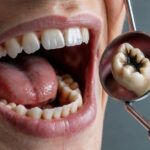

You made the brave and smart decision to save your natural tooth with a root canal treatment—a successful procedure designed to eliminate infection and relieve pain. Yet, a few weeks, months, or even years later, you look in the mirror and notice it: the treated tooth is beginning to look dull, grey, or even dark. This phenomenon, known as root canal discoloration, can be frustrating, especially when it affects a front tooth.
It’s a common concern that we hear at Madison Dentistry & Implant Center in Madison, New Jersey. Patients often ask, “Why did my tooth turn dark after a root canal, and is it a sign of a failing procedure?”
The good news is that in most cases, a discolored tooth simply presents a cosmetic issue, not a functional failure. Modern cosmetic and restorative dentistry offers incredibly effective solutions to restore your tooth’s natural shine and your confidence.
This comprehensive guide, will deep-dive into the causes of root canal discoloration, the latest preventive strategies, and the life-changing cosmetic treatments available to ensure your smile remains bright, uniform, and beautiful.
Understanding the Root Cause: Why Does a Tooth Turn Dark After a Root Canal?
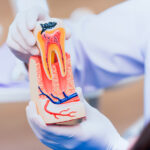
A natural tooth is a living structure, nourished by a pulp containing blood vessels and nerves. During root canal therapy, this infected or inflamed pulp is carefully removed. While the procedure successfully saves the tooth structure, the tooth technically becomes non-vital, and its appearance can change over time.
Discoloration is often classified as an intrinsic stain—meaning the source of the stain is inside the tooth structure, not just on the surface. Here are the four primary culprits behind a dark tooth after a root canal:
1. Residual Pulp Tissue and Blood Products
The most common cause of discoloration is the presence of residual pulp or blood byproducts.
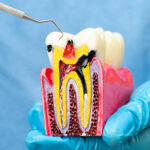
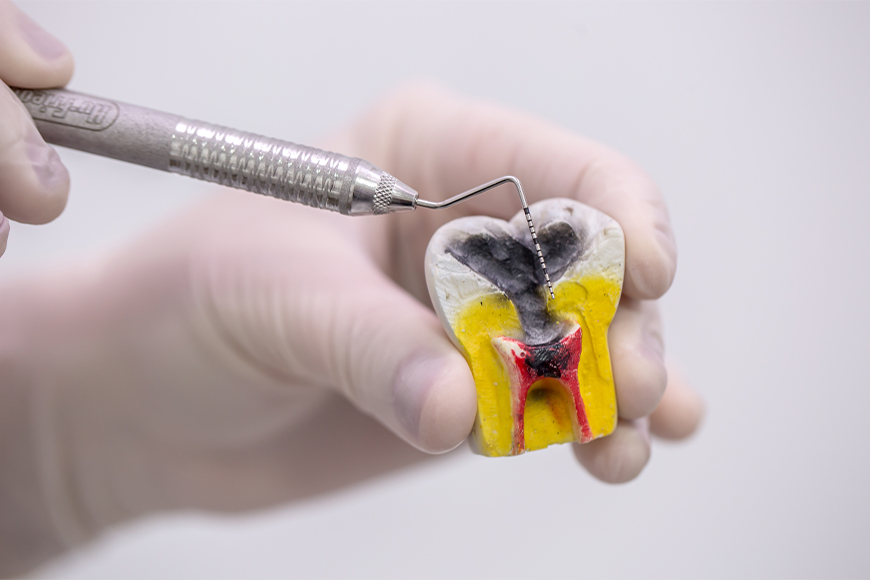
- The Breakdown: After removing the nerve and blood vessels, microscopic remnants of the necrotic (dead) pulp tissue or blood can linger in the tiny dentinal tubules (small channels in the dentin layer of the tooth).
- The Color Change: As hemoglobin in the blood breaks down, its iron components release pigments that seep into the surrounding dentin, gradually staining the tooth from the inside out, often resulting in a grey, brown, or black hue. Thorough cleaning of the pulp chamber is critical to prevent this.
2. Internal Bleeding from Trauma
In many cases, the need for a root canal is preceded by significant dental trauma (a blow to the tooth).
- Prior to Treatment: Even before the root canal, trauma can cause internal bleeding within the pulp chamber. These blood breakdown products will stain the tooth.
- Post-Treatment: If this staining is not completely removed during the endodontic procedure, the tooth will remain discolored.
3. Root Canal Filling Materials
The materials used to seal the root canal can sometimes be the cause of the staining, particularly with older techniques.
- Older Sealers: Historic root canal sealers, such as certain zinc-oxide eugenol or resin-based materials, were prone to degradation and staining the overlying dentin.
- Modern Materials: Some modern materials, particularly those containing bismuth oxide (like early forms of MTA), can also cause a greyish stain when they interact with the collagen in the tooth structure or air. Modern bioceramic sealers are now preferred due to their non-staining properties.
4. Inadequate Coronal Restoration and Microleakage
The filling or crown placed on top of the treated tooth (the coronal restoration) plays a vital role.
- Amalgam Fillings: Older, dark metal (amalgam) fillings placed after the root canal can cast a grey shadow through the tooth structure, especially in thinner areas like the enamel.
- Leakage: A poorly sealed filling or crown can allow saliva, bacteria, and staining agents (like coffee, tea, and red wine pigments) to penetrate the tooth structure around the root canal filling, leading to discoloration.
Prevention is the Best Medicine: Minimizing the Risk of Discoloration
While some discoloration is a natural risk for a non-vital tooth, modern endodontic and restorative techniques offer effective ways to significantly reduce that risk. At Madison Dentistry & Implant Center, we adhere to the latest protocols to protect your smile’s aesthetics.
Tips for Minimizing Post-Root Canal Discoloration:
- Thorough Pulp Chamber Cleaning: This is the most crucial step. Your dentist must meticulously remove all remaining pulp and sealer material from the pulp chamber (the crown portion of the tooth) before sealing it. This eliminates the primary source of internal staining (residual blood products).
- Using Aesthetic Sealing Materials: We choose modern, non-staining, and biocompatible root canal sealers, such as bioceramics, which drastically lower the chance of material-induced grey staining compared to older compounds.
- Placing an Internal Barrier: A thin layer of restorative material (like a glass ionomer) is often placed over the root canal filling material within the tooth’s crown. This acts as a protective barrier, preventing the root canal sealer from showing through.
- Immediate and Quality Restoration: Following your root canal, prompt placement of a definitive, well-sealed tooth-colored filling or dental crown (especially for back teeth) is essential. This prevents leakage and surface stain penetration.
- Choosing Ceramic or Composite: For the final restoration, avoid old-style amalgam. Opting for a tooth-colored material like composite resin or a porcelain/ceramic crown ensures the restoration itself doesn’t cause a darkening shadow through the tooth structure.
Restoring Your Brightness: Treatment Options for Discolored Teeth
If you are already experiencing tooth discoloration after a root canal, there are several highly successful and conservative methods to restore your natural smile. The best treatment depends on the severity and cause of the stain.
1. Internal Bleaching (The “Walking Bleach” Technique)
This is the most conservative and often the first-line treatment for an intrinsically stained, non-vital tooth.
- The Procedure: Unlike traditional whitening applied to the tooth surface, internal bleaching involves your dentist creating a small access point on the back of the tooth. They then remove the old filling, clean the discolored dentin, and place a specialized, powerful bleaching agent directly inside the tooth’s pulp chamber.
- How it Works: This bleaching agent is sealed with a temporary filling and left for a few days—hence the term “walking bleach.” You return for follow-up visits until the desired shade is achieved, after which a permanent, tooth-colored filling is placed.
- The Benefit: It whitens the tooth from the inside out and avoids removing any external tooth structure. This is an excellent option for teeth discolored by residual blood pigments.
2. Cosmetic Dental Bonding
For mild to moderate discoloration, especially on a front tooth, composite bonding can offer a quick and effective fix.
- The Procedure: A tooth-colored composite resin material is skillfully applied to the front surface of the discolored tooth, shaped, and polished to perfectly match your surrounding teeth.
- The Benefit: It is a minimally invasive, single-visit procedure that conserves natural tooth structure. It’s ideal for masking slight discoloration or imperfections.
3. Porcelain Veneers
When the discoloration is severe and does not respond sufficiently to internal bleaching, or if the tooth has chips, cracks, or minor misalignment, a porcelain veneer provides a comprehensive aesthetic solution.
- The Procedure: A thin, custom-made shell of dental-grade porcelain is bonded to the front surface of the tooth. The porcelain’s opacity is perfectly engineered to block out the underlying darkness while reflecting light like a natural tooth.
- The Benefit: Veneers offer superior stain resistance and a high-level, long-lasting cosmetic result, perfectly blending with the rest of your smile.
4. Dental Crowns
If the root canal-treated tooth is not only discolored but also structurally weak due to extensive decay or filling, a dental crown is often the best choice for both function and aesthetics.
- The Procedure: A tooth crown covers the entire visible portion of the tooth, restoring its original size, shape, and strength. Modern, all-ceramic (porcelain) crowns are highly aesthetic and eliminate the dark line often seen with older metal-based crowns.
- The Benefit: It provides the ultimate protection against fracture for the non-vital tooth while completely masking even the most severe discoloration with a natural-looking restoration.
Local Expertise for Your Bright Smile in New Jersey
If you’re noticing an unwelcome shade change in a tooth you’ve had treated, don’t just live with it. As a leading provider of comprehensive and cosmetic dental services in Madison, New Jersey, Madison Dentistry & Implant Center is here to help.
Our team, serving the communities of Chatham, Florham Park, Morristown, and New Providence, utilizes the most advanced, non-staining materials and conservative techniques for all root canal and restoration procedures. We prioritize the health and aesthetics of every tooth we treat.
If you have a dark tooth after a root canal, we can accurately diagnose the cause and recommend a tailored treatment plan, whether that is internal bleaching, composite bonding, or a high-quality aesthetic crown. Your journey to a renewed, dazzling smile starts with a simple conversation.
Frequently Asked Questions (FAQs) About Root Canal Discoloration
Does a discolored tooth mean my root canal failed?
Not typically. In most cases, root canal discoloration is a purely cosmetic issue. If your tooth is free of pain, swelling, or signs of re-infection on an X-ray, the root canal procedure itself is likely successful. However, a dark tooth accompanied by new pain or swelling does warrant an immediate check-up.
How long does it take for a tooth to turn dark after a root canal?
The timeline varies greatly. Staining from residual blood products can appear relatively quickly—within a few weeks to months. Discoloration due to material leakage or the slow, natural changes in a non-vital tooth may take years to become noticeable.
Can I use over-the-counter whitening strips to fix the discoloration?
No. Over-the-counter (external) whitening strips or gels only affect the outer surface of the enamel. Since root canal discoloration is an internal stain, these products will not penetrate deep enough to be effective. For non-vital teeth, the only effective whitening method is professional internal bleaching, performed by your dentist.
Is internal bleaching safe for the tooth structure?
Yes, when performed correctly by an experienced dental professional, internal bleaching is a safe, conservative, and highly effective treatment. It is designed to preserve the tooth structure while removing the internal stains.
Conclusion: Don't Let a Dark Tooth Dim Your Smile!
A root canal is an incredible procedure that saves teeth and relieves severe pain. While root canal discoloration is a frustrating side effect for some, it is by no means permanent. You do not have to settle for a dull or dark tooth.
From advanced prevention techniques like using bioceramic sealers to highly aesthetic solutions like internal bleaching and porcelain veneers, modern dentistry provides all the tools necessary to keep your smile uniform and radiant.
If you live in Madison, NJ, or the surrounding areas of Chatham, Florham Park, New Providence, or Morristown, and are concerned about a dark tooth after a root canal, we invite you to schedule a consultation with the experienced team at Madison Dentistry & Implant Center.
We are ready to assess your unique situation and craft a personalized plan to bring the light back to your smile. Contact us today—your confidence is our priority!